 0 ITEMS IN CART

CSA BOX CONTENTS WEEK OF JAN 22ND
01/23/18 — Scott
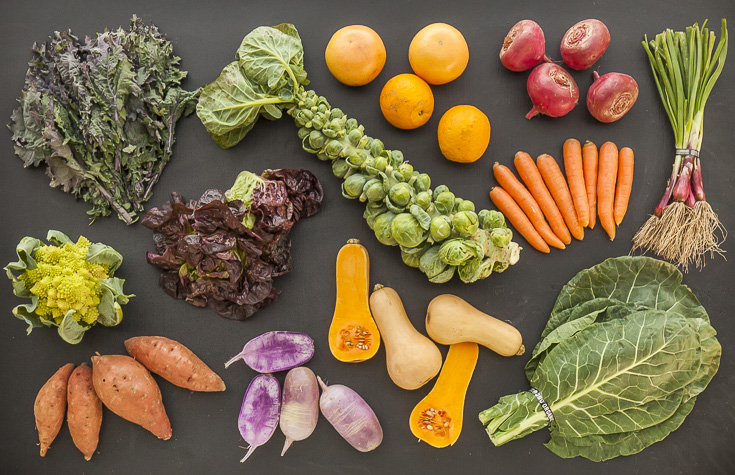 CSA Box Contents Week of Jan 2nd
Large Box
Brussels Sprouts
Carrot, Orange
Cauliflower
Citrus, Mixed
Greens, Collards
Greens, Kale, Curly
Lettuce, Romaine
Onion, Spring Red
Potato, Sweet
Radish, Purple Daikon
Squash, Butternut
Turnip, Scarlett
Brussels Sprouts
Carrot, Orange
Cauliflower
Citrus, Mixed
Greens, Collards
Greens, Kale, Curly
Lettuce, Romaine
Onion, Spring Red
Potato, Sweet
Radish, Purple Daikon
Squash, Butternut
Turnip, Scarlett
Medium Box
Carrot, Orange
Citrus, Mixed
Greens, Collards
Greens, Kale, Red
Lettuce, Romaine
Onion, Spring Red
Potato, Sweet
Radish, Purple Daikon
Squash, Butternut
Carrot, Orange
Citrus, Mixed
Greens, Collards
Greens, Kale, Red
Lettuce, Romaine
Onion, Spring Red
Potato, Sweet
Radish, Purple Daikon
Squash, Butternut
Small Box
Garlic, Green
Greens, Collards
Greens, Kale, Curly
Kohlrabi, Purple
Lettuce, Romaine
Potato, Sweet
Turnip, Rutabaga
Garlic, Green
Greens, Collards
Greens, Kale, Curly
Kohlrabi, Purple
Lettuce, Romaine
Potato, Sweet
Turnip, Rutabaga
Individual Box
Broccoli
Greens, Collards
Lettuce, Romaine
Potato, Sweet
Turnip, Scarlett
Broccoli
Greens, Collards
Lettuce, Romaine
Potato, Sweet
Turnip, Scarlett
21 REASONS TO JOIN (OR RE-JOIN) OUR CSA THIS FALL
01/19/18 — Heydon Hatcher

This week we sat down and listed a handful of reasons why you should sign up for a CSA with us! Are you a lapsed CSA member? Maybe it's time to ponder re-joining us! We miss you! With the influx of delectable leafy-green-heavy crops and spring right around the corner, 'tis the season to join our farm community and get yourself a CSA share!
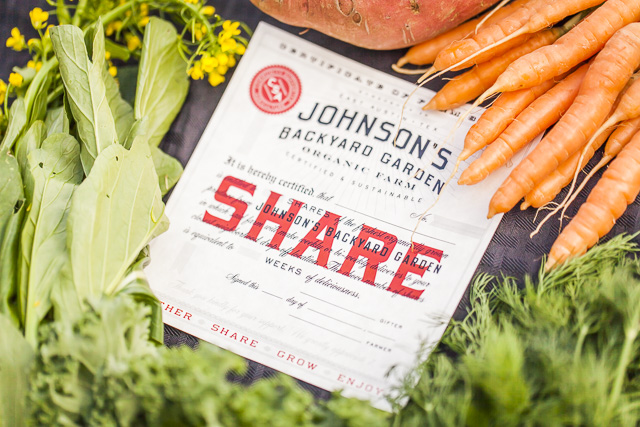 Photo by Scott David Gordon.
1. SUPPORT LOCAL
By joining our CSA, you are supporting a locally owned and operated business. Buying local helps our economy as well as supply jobs and support the livelihood of fellow Austinites. Unique local businesses are part of what makes Austin and Texas so special!
Our CSA can augment your regular weekly shopping list, ensuring that you have some of that scrumptious local produce in your diet, too! A little goes a long way!
2. Good for your Health
Farm-fresh vegetables are jam packed with vitamins and minerals that are essential to maintaining a healthy lifestyle. Two and a half cups a day says the FDA? Ain’t no thang with a CSA headed your way.
3. Freshest-Possible Veggies
Cultivated in East Austin and harvested no more than a day or two before reaching your doorstep, these vegetables are at peak nutrition and flavor. Getting a CSA share with JBG means you know exactly where your food is coming from and how it's grown. GMO? Heck no! Come out for a volunteer day, see your crops in the field, and ask your farmers about it!
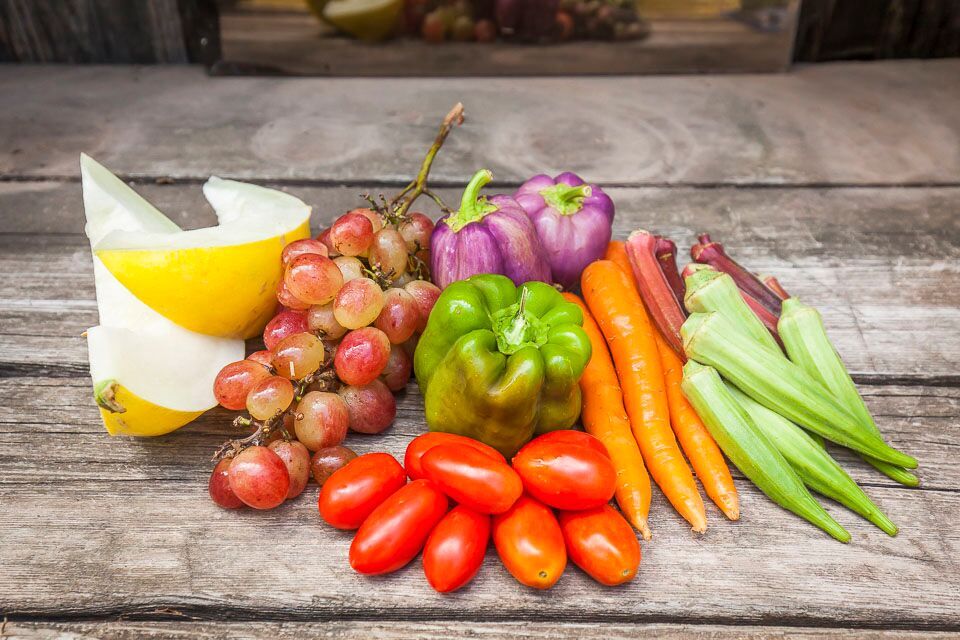 Photo by Scott David Gordon.
4. Know your Seasons
Eating locally connects you to the seasons, to the land, and to your own health and wellness. Cucumbers will cool you down in the summer, while braised collards will warm you up when the temperatures start to drop. Enjoy the best pico de gallo of your life during the short window when cilantro, onions, peppers, and tomatoes all overlap, and we promise you'll never go back to the store-bought stuff again. You'll get acclimated with the seasons on a whole new level, and learn about what naturally grows when and why.
5. Try New Foods
With farmers who are constantly chompin’ at the bit to try a new crop, who knows what will show up in your CSA box. From the array of Asian greens to the broad pepper spectrum, keep your mind wide open to a whole new world of vegetables you never even knew existed.
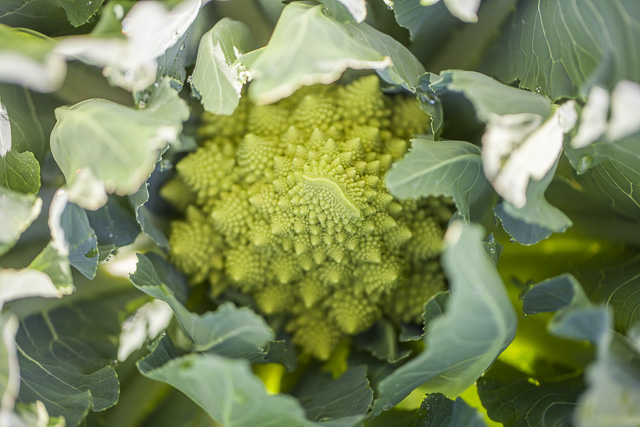 Photo by Scott David Gordon.
6. Experiment in the Kitchen
With JBG veggies arriving every week, you will have to innovate in the kitchen. Get out of your comfort zone and try something new!
7. Protecting our Environment
By supporting JBG, you are ensuring sustainable land management, and organic certification guarantees that we never spray harmful chemicals on the farm.
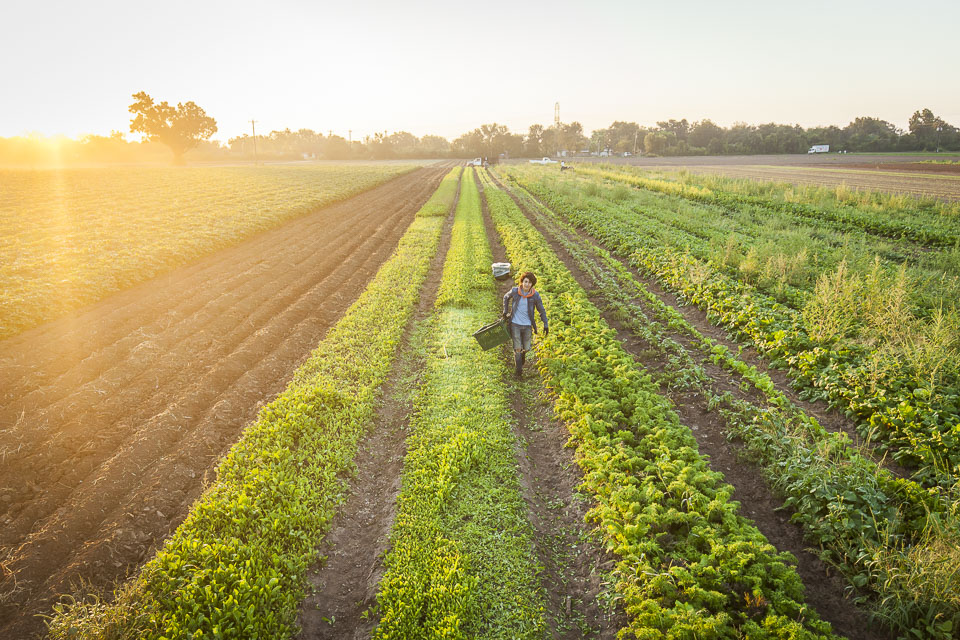 Photo by Scott David Gordon.
8. Reduce Food Miles
It's estimated that the average American meal travels over 1500 miles before making it to a dinner plate. With all of that fuel, even a plant-based meal might not be so eco-friendly. We do wave at the planes going by, though, our farm is just 10 miles east of the Austin-Bergstrom airport!
9. Flexibility
Gone on vacation for a week or a month? No problemo, we make it super easy to postpone your weekly deliveries. Got a big family, or just feeding yourself? We have 4 different box sizes that cater to your lifestyle. JBG also offers add-ons of local eggs from pasture-raised hens, and small batch locally roasted coffee as well. Customize your box with your favorite veggie and ditch the ones you aren’t keen on.
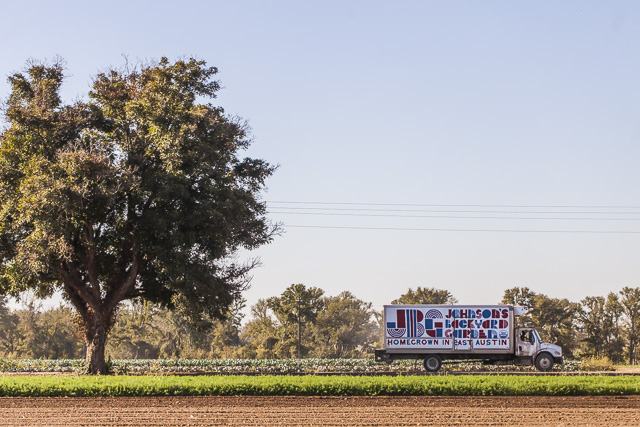 Photo by Scott David Gordon.
10. Get involved with our CSA Community
With member-only dinners, happy hours, plant sales, cooking classes, yoga + races at the farm, PYO-events, we really emphasize the “C” of CSA. We want the farm to connect awesome people, whether at one of the aforementioned events or at your community pick-up site! Speaking of exclusive farm events, be on the lookout for our Spring Transplant Sale and Picnic!
11. JBG on the WWW
On our website, you can stay current on farm events, sign up for our weekly newsletter, grab storage tips from our veggie guide, check out the weekly CSA content list, peruse weekly photo-updates from the field, and check out our recipe blogger’s latest CSA culinary exploration.
12. Farm Community on the WWW
If our website isn’t enough, our CSA community loves sharing how they innovate with their veggies on social media outlets. Check out our Instagram or FB, we love re-posting awesome recipes, photos, and videos from the community. Running low on recipe ideas, and want to see what other folks are doing with our produce? Check out our jbgorganic hashtag!
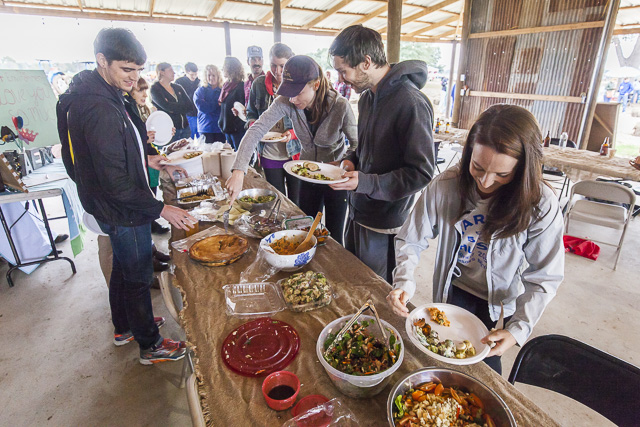 Potluck. Photo by Scott David Gordon.
13. Farm Access
Located on the Colorado River, JBG’s 200 acres of verdant crops and brilliant blooms are often otherworldly. As a CSA member, you will have access to our little oasis of wilderness whether it be at a JBG CSA event, or through volunteering!
14. Know your Farmers
Montana seeds the crops, Ada champions our marketing efforts, Brenton and Charlotte manage the fields, Krishna crunches numbers, Matt and his crew carefully pack every single CSA box... we love our people, and think you will, too. Come and meet us, we are regular Austin folks, just like you.
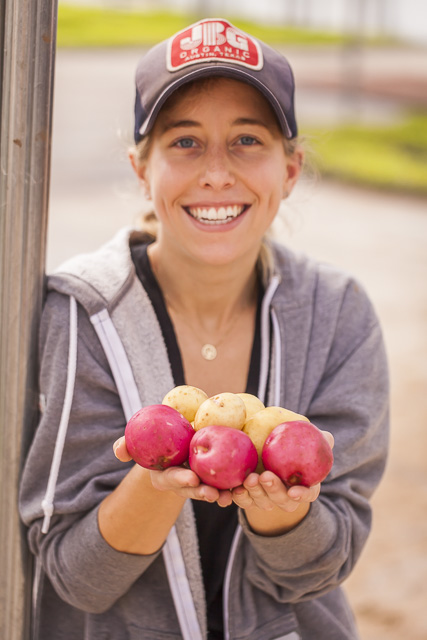 Charlotte. Photo by Scott David Gordon.
15. Farmers Markets
If you pick up at one of our many farmer’s markets, you have the ability to switch out veggies that you aren't fond of with the bounty we offer at our FM stands. Pretty cool, right? On top of that, it’ll get you outside interacting with people, and who knows what hip and healthy folks you’ll meet!
16. Farmers Market Staff
Our FM staff is the best in the biz (okay, okay, we are super biased), but seriously, introduce yourself! They know all the veggie hacks, hail from all over the place, and have all kinds of talents and alter-egos. Artists, teachers, law students, musicians, dreamers, writers, you name it! Bop on by and learn something new while browsing through our market crops!
17. Feed Those in Need
Thanks to the support of our CSA members, JBG is able to donate thousands of pounds of produce every year to large operations like SafePlace, Central Texas Food Bank, as well as grassroots efforts like Nubian Queen Lola who are all helping to keep Austin’s hungry, nurtured and fed.
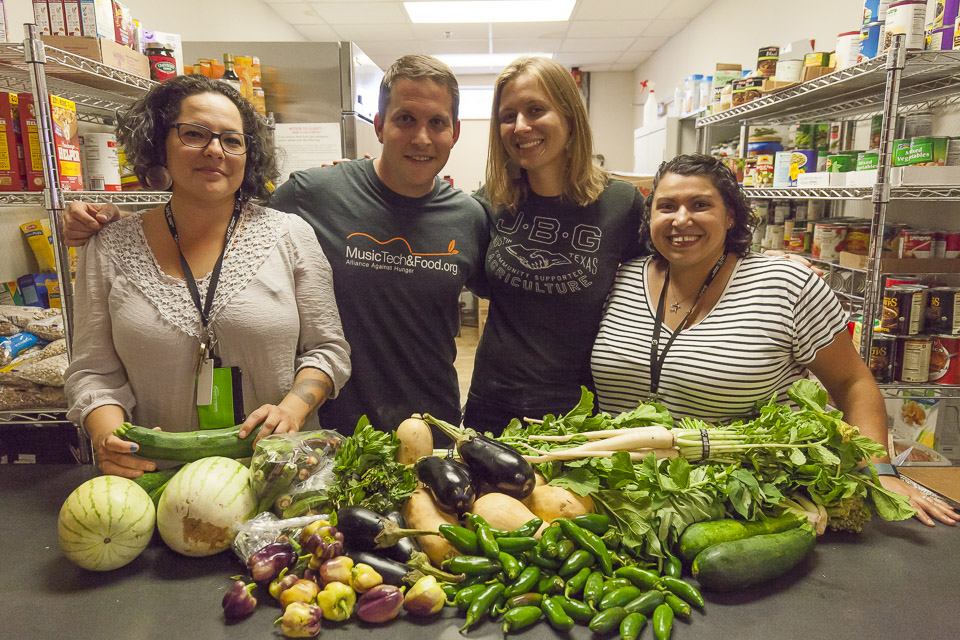 SafePlace. Photo by Scott David Gordon.
18. WACKY and WONKY FRUITS and VEGGIES
19. JBG hats
Reppin’ on your head but not on your plate? Add some JBG veggies to your diet and see what we’re all about.
20. FOOD MAIL!?
In a world where the fast-paced, high tech lifestyle seems ubiquitous, who doesn’t love a box full of veg-surprises on your doorstep?! It’s like food snail mail! We sometimes even leave little personal notes about what's going on with the crops and/or upcoming events!
21. Farm Work-out Videos!
Eat healthy AND get movin'! Check out more of the actual video here.#tbt to the glorious day, about a year ago, when Erica Nix and her amazing flock jazzed up the farm.
A photo posted by Johnson's Backyard Garden (@jbgorganic) on
Think you know a friend who needs some reasons to join the CSA? Please consider sharing this article with them!
***Contributions by Nellie Stephenson + Ada Broussard
CHEF SPOTLIGHT: GABE ERALES OF DAI DUE TAQUERIA
01/19/18 — Heydon Hatcher
This week we are honored to have had the immense pleasure of conducting our inaugural Chef Spotlight series with the highly skilled and seemingly ubiquitous, Gabe Erales. Hailing from El Paso with deep familial roots in the Yucatan, Gabe is a Renaissance family man trained as a mechanical engineer. He is also the head chef for the freshly opened, Dai Due Taqueria at the new FareGround food hall in the heart of Downtown Austin.
We met at the new downtown location (lauded by Money Inc as one of the seven most anticipated food hall openings in the world) shortly before the grand opening this week, a stunning space designed by none other than Michael Hsu, and learned all about Gabe's cooking tenure, his influences, and his undying passion for a bona fide and carefully constructed taco. Get to know this guy, and get down to the new Dai Due Taqueria pronto, you won't regret it.
![]() Gabe Erales leaning on the corn grinder in the Dai Due Taqueria kitchen. Photo by Timothy Patrick Clancy.
Gabe Erales leaning on the corn grinder in the Dai Due Taqueria kitchen. Photo by Timothy Patrick Clancy.
Where are you from and how did you get into cooking?
I grew up in El Paso, Texas… west Texas on the border. I got into cooking mostly because of the influence of Mexican cooking from my mom and dad. My family actually came from Mexico in the Yucatan peninsula, Quintana Roo, to El Paso. My mom was always cooking for a big family. I have 5 brothers and a sister, there are 7 of us in total. She was always doing large format style cooking to keep us all fed. One thing that stands out in my mind is she would make cochinita pibil which is something that we have on the menu here. It’s really special to me, it’s a pork braise that is wrapped in banana leaves and cooked in sour oranges, annatto seeds, chiles (it’s bright red), and served with pickled onions and habaneros. We are doing the same thing here but with feral hog. It’s delicious. That kind of stuff, tamales and general Mexican preparations that she grew up eating and feeding to me, really sparked my interested in cooking. Above all, I started working in kitchens when I was 15 because my older brothers were already working in restaurants as their after school jobs. That was my way of making money ever since I started cooking with an exception of a brief period after school… I started as a busboy at Steak and Ale, moved to prep, and worked in restaurants all through high school. I moved to Austin to attend UT and was supporting myself in restaurants while I was studying engineering. I actually have a Bachelors and Masters in mechanical engineering. While I was studying, I was working in restaurants and basically running from school to work, and from work to studying. After I graduated from UT, I was working for General Motors in Detroit doing design. I started really missing cooking and being in the kitchen, so I got back into it and it's kind of been full speed ever since. I've always been doing a million things at once it's always been a good balance for me.
![]() Yummy meats on a spit. Photo by Timothy Patrick Clancy.
Yummy meats on a spit. Photo by Timothy Patrick Clancy.
Where all have you cooked in town?
I've worked at Fonda San Miguel, and that was a really big influence for me because I feel like because they were the institution of Mexican cooking in town. They were probably the first people to do nixtamalization and fresh masa in house daily, which most people use flour maseca… fresh masa in house makes a huge difference. They have incredible moles, and very authentic regional preparations. Miguel Ravago, the founder, owner, and chef, who recently passed away last year, was involved with a lot of really notable chefs and would involve them in his menu. A lot of great chefs have passed through that establishment. Diana Kennedy was always there consulting on moles which is huge, huge, huge. I worked at La Condesa (under Rene Ortiz) which also had a ton of great chefs passing through there as well. Their food is amazing... Rick, who is still the chef there, is doing an amazing job. I worked at Odd Duck and Qui. I helped open Dai Due - the sister restaurant to this Taqueria, and I helped open up the Geraldine’s restaurant in the Hotel Van Zandt (was there for about two years, as sous chef). I left there to go work in the test kitchen for the Noma Mexico team with Rene Redzepi and helped with the menu development in Tulum. When I returned I was focusing on this project, and that’s what I’ve been involved with ever since.
Tell us about your newest project!
Well, this is the Dai Due Taqueria. It’s located in the new FareGround food hall on Cesar Chavez and Congress. There are 6 permanent restaurants here along with a full bar. I'm head chef here. Jesse Griffith obviously is still the chef and owner at both restaurants, but as far as menu and the day to day operations, I'm your guy.
![]() Dai Due Taqueria at FareGround. Photo by Timothy Patrick Clancy.
Dai Due Taqueria at FareGround. Photo by Timothy Patrick Clancy.
What item are you most excited about on your menu?
There are two things. Number one is the trumpo, it’s the meat over there that looks like a gyro meat. We call it the trompo al pastor. It's very special because we're cooking over Texas charcoal, which a friend of mine makes here in town. The actual meat is wild boar, it's been brined and marinated. I think everyone loves an al pastor taco, so this is really, really special. Also, there's a torta called a pambazo. It's essentially a torta bread that's been dipped in very spicy chili broth. We take bone broth and infuse it with a lot of chiles. It's really bright red and really thick with a lot of body, kind of like a ramen broth. Then we get the torta, and fill it with wild boar chorizo, potatoes, avocado, and cheese. All of that gets melted together, then dipped in that broth, and then regrilled on a flat top. It’s this bright red sandwich that's crispy, has some char marks, and when you bite into it you get this really nice crispy cabbage and radish taste, too. It’s a very Mexico City style torta. I've yet to see one of those in the city here in Austin so I'm really excited that we're kind of introducing our version of it to people.
![]() The trompo meat. Photo by Timothy Patrick Clancy.
The trompo meat. Photo by Timothy Patrick Clancy.
What is the most surprising thing about working with farms?
I think the most surprising thing to me is that for the longest time people just accepted what was sold. You go to the farmers market, there's carrots, cabbage, cauliflower, garlic, and onions… and you worked with that. However, the relationship between the farmer and the chef has grown so much. Now we partner together, I tell a farmer what I want for my menu, and then they in turn buy seed and try to grow ingredients accordingly. People are growing stuff that you would have never seen grown in Texas previously! There's a girl here in town who's growing extremely rare chiles, chihuacles, and those are even rare in Mexico. So, for them to be grown in Austin is mind-blowing and exciting. I'm working with other people here that are growing some special Mexican herbs, and I have stuff that I brought back from Mexico, a wild mexican spinach.
Tell us about your relationship with JBG?
My first introduction to local farmers was through Johnson's Backyard Garden, back when y’all were extremely small. Brent was at all the Farmers Markets himself, and hosting everybody on the farm very often. So, that's why I still do business with JBG... it's really special to me, and I think a lot of the product is just really amazing. Y’all have grown so much - I hear you deliver to Houston, Dallas, San Antonio… wild.
![]() JBG produce in the kitchen. Photo by Timothy Patrick Clancy.
JBG produce in the kitchen. Photo by Timothy Patrick Clancy.
What is the most difficult part about working with farms and sourcing locally?
The most difficult part is the commercial and logistical side of things. People like Farm to Table have changed the game in that it's a one stop shop. You can call them and be like, “I need beets,” and if you have a good relationship with them then they'll send you the best unless you tell them you want some of the cheapest beets they have, and they send you that. It’s a one stop shop, so you aren’t calling 6 different farmers. You aren’t worried about if and when the farm is going to deliver, but on the same token you're paying a premium, so food cost is a big issue. You have to take the extra effort to call all five different farmers instead of just getting the consolidated service from Farm to Table. With farms, schedules and availability can be an issue. It’s first come, first serve, and sometimes when you are planning a menu around a certain veggie and something happens with the harvest or they sell out it can be difficult. However, if you go directly to the farm you’re going to get a better product. There's a lot of farmers that just don't deliver, too, but have amazing product. In a day-to-day operation, it's really hard to break free and go pick up veggies at a farm. You can't really do that all the time… but, there are people who do that in town! Barley Swine’s kitchen goes to the farmers market every Saturday religiously. I admire Bryce and Mark for doing that. It's amazing and there's a special intimacy there. It's hard for everyone to be on that level after long hours the night before in the kitchen.
How do you decide where to source from?
It's always going to be a balance of quality and price. So, if I am using a product that's going to be the showcase of the dish or the meal, then I'm obviously going to be willing to pay a little more premium on a product. If it's something that's going to be cooked and blitzed into a sauce or a garnish that doesn't need to be as robust of a flavor, then you don’t need to spend as much. It's just a give and take. You have to evaluate what the food cost of a plate is versus overall food cost in general, and how much more of a return on your investment you're going to get. If I were to buy Johnson's sweet potatoes versus Tecolote’s, how much better is the flavor for an extra 50 cents? It also depends on availability. I like to provide loyalty to farms, too. If Johnson’s is taking care of me and is always on time, I’m going to keep my commitment to support them. It’s always a relationship, and I feel like in this day and age there are so many farmers that take it really personally. In this day of social media, people’s feelings can really get hurt if you get, let’s say carrots, from someone else. You gotta tread lightly.
![]() Spices at the Taqueria. Photo by Timothy Patrick Clancy.
Spices at the Taqueria. Photo by Timothy Patrick Clancy.
What is the best part about working with local farms?
Obviously, I feel like the sustainability aspect and the return to the community. It's a closed loop cycle. It's really great to have the same farmers that are delivering your food be the same people you're feeding. You get to know their family and their kids, and it goes back to the intimate relationship of working with them and them growing special ingredients for you. Going through US Foods or Sysco, I guarantee you're never going to meet the face of where your product comes from. You don’t know what they’re going through to grow that product or how much care is going into that product. So, I feel like to understand the relationship and intimacy of the farm and how it’s being raised is really special. Same thing goes for animals, too. We use feral hog on the menu because it’s delicious, but also an invasive species. The Spanish brought these pigs hundreds of years ago, and they eventually procreated and took over Texas along with other parts of the country. They cause hundreds of millions of dollars of damage to farms, urban residences, and cemeteries all over the place. They are called wild boar, a little misleading, they are actually out in the wild; however, after they are trapped and killed, they are inspected. It’s not like Jesse goes out and hunts feral hog and just brings it in and throws it on the grill... people actually ask that all the time. He’s an amazing hunter and goes often, but he doesn’t kill these hogs. It’s all about sustainability, there’s tons of feral hog and they are delicious. They love acorns, and it adds this nice malty, nutty flavor to the protein that we cook, too.
Is there anything that you think our readers would be surprised to know about day to day in the kitchen?
The amount of technique that goes into making a taco. I feel like the community's been so inundated with, and not to take anything away from Taco Deli or Torchy's, places that pump out a lot of tacos everyday. You go and wait in line and get your tacos ten minutes later, not to say they're not good, but I don't think the amount of technique and care that's going into making those is on the same level of what we're doing here. We're bringing in Mexican heirloom corn that gets cooked, ground, and made into fresh tortillas daily. It's a lot different than having a truckload of tacos dropped off, and you just reheat them. In my opinion, a taco is only as good as the tortilla it’s served on. You can have a delicious filling, but if the tortilla that’s holding it together is falling apart… it’s not that great. The taco was founded on corn, and that’s the backbone of it all. So we really prize ourselves on our masa program. Day to day, the amount of technique that goes into the sauces, the meat, the butchery… everything.
![]() Heirloom corn. Photo by Timothy Patrick Clancy.
Heirloom corn. Photo by Timothy Patrick Clancy.
![]() Tortilla making process. Photo by Timothy Patrick Clancy.
Tortilla making process. Photo by Timothy Patrick Clancy.
![]() Tortilla making process. Photo by Timothy Patrick Clancy.
Tortilla making process. Photo by Timothy Patrick Clancy.
What’s your favorite vegetable to work with and least favorite?
Easy - I love chiles. I grew up eating chiles with my parents influence. Even as a kid I was eating raw habaneros macerated in lime and salt. Cooking with chiles is really special to me. I love carrots, and I really love corn obviously. It’s also really special to me, and I relish all the different ways it’s used. My least favorite is dandelion greens. I’ve tried cooking them tons of different ways, but they are just a little too bitter for me.
What advice would you give to a home chef who is trying to learn to cook with more seasonal vegetables?
I would say go to the farmers market and pick up something you have never cooked with before. Get on the internet and use it as a resource or use food magazines, like Bon Appetit and Food & Wine. They always have a lot of the latest food recipes and trends for seasonal vegetables. There's a lot of creative stuff that their staff puts together for recipes... it's really inventive and delicious. For savory cooking it doesn't need to be quite as accurate, and you can improvise a lot more. Be adventurous!
![]() Kitchen scenes at the Taqueria. Photo by Timothy Patrick Clancy.
Kitchen scenes at the Taqueria. Photo by Timothy Patrick Clancy.
Any quick recipe or technique you’d like to share with our readers (with something in season)?
I really think right now sweet potatoes are really, really delicious. Something that we're doing on our cochinita pibil taco is pickling them fresh. So, since we don't have red onion right now, we're using sweet potatoes, julienned fresh and then pickled with chile piquin. That pickled sweet potato goes as a garnish on the taco, and it makes an amazing pickled item. My Sous chef, Mike Diaz, came up with the idea. Give it a try!
A huge thank you to Gabe Erales for taking the time to speak with us this week and Timothy Clancy for the amazing photos! Find more photos on his site or on his Instagram.
We met at the new downtown location (lauded by Money Inc as one of the seven most anticipated food hall openings in the world) shortly before the grand opening this week, a stunning space designed by none other than Michael Hsu, and learned all about Gabe's cooking tenure, his influences, and his undying passion for a bona fide and carefully constructed taco. Get to know this guy, and get down to the new Dai Due Taqueria pronto, you won't regret it.
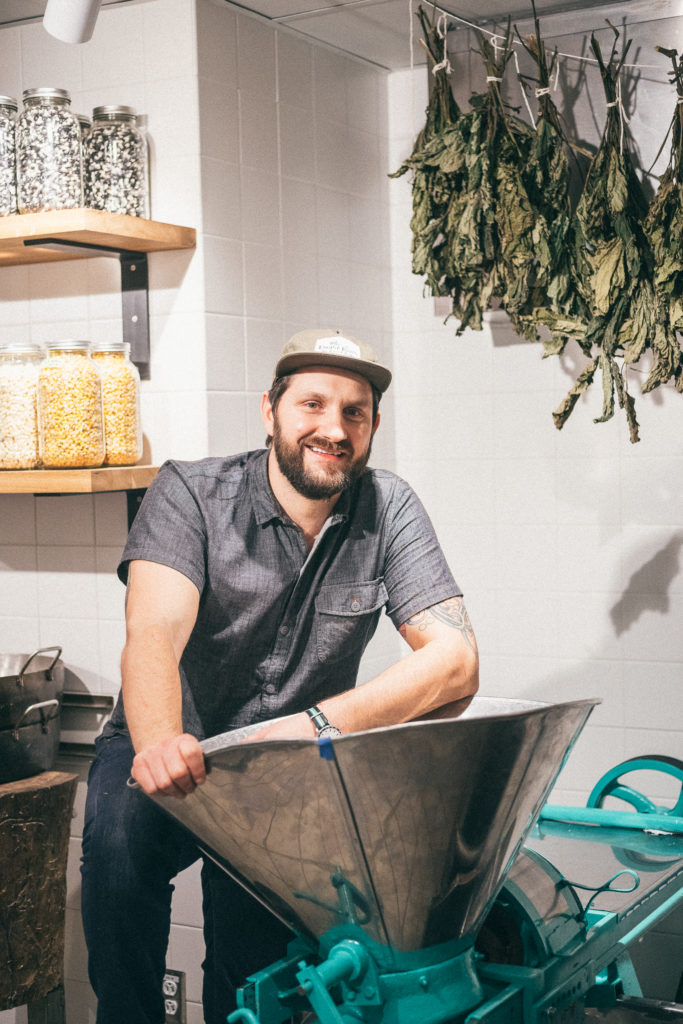 Gabe Erales leaning on the corn grinder in the Dai Due Taqueria kitchen. Photo by Timothy Patrick Clancy.
Where are you from and how did you get into cooking?
I grew up in El Paso, Texas… west Texas on the border. I got into cooking mostly because of the influence of Mexican cooking from my mom and dad. My family actually came from Mexico in the Yucatan peninsula, Quintana Roo, to El Paso. My mom was always cooking for a big family. I have 5 brothers and a sister, there are 7 of us in total. She was always doing large format style cooking to keep us all fed. One thing that stands out in my mind is she would make cochinita pibil which is something that we have on the menu here. It’s really special to me, it’s a pork braise that is wrapped in banana leaves and cooked in sour oranges, annatto seeds, chiles (it’s bright red), and served with pickled onions and habaneros. We are doing the same thing here but with feral hog. It’s delicious. That kind of stuff, tamales and general Mexican preparations that she grew up eating and feeding to me, really sparked my interested in cooking. Above all, I started working in kitchens when I was 15 because my older brothers were already working in restaurants as their after school jobs. That was my way of making money ever since I started cooking with an exception of a brief period after school… I started as a busboy at Steak and Ale, moved to prep, and worked in restaurants all through high school. I moved to Austin to attend UT and was supporting myself in restaurants while I was studying engineering. I actually have a Bachelors and Masters in mechanical engineering. While I was studying, I was working in restaurants and basically running from school to work, and from work to studying. After I graduated from UT, I was working for General Motors in Detroit doing design. I started really missing cooking and being in the kitchen, so I got back into it and it's kind of been full speed ever since. I've always been doing a million things at once it's always been a good balance for me.
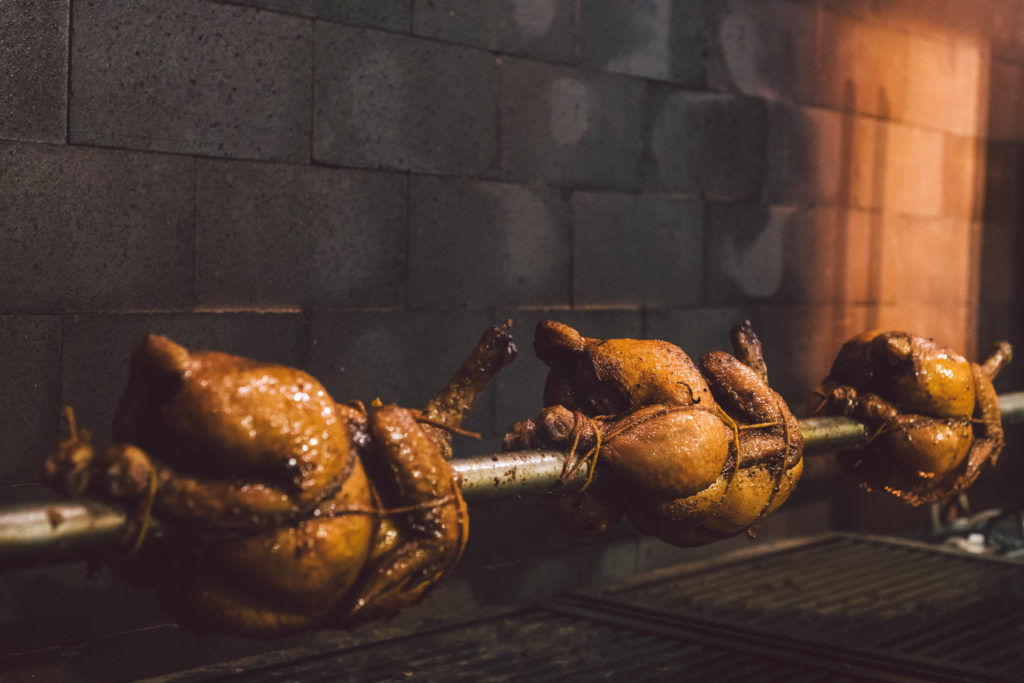 Yummy meats on a spit. Photo by Timothy Patrick Clancy.
Where all have you cooked in town?
I've worked at Fonda San Miguel, and that was a really big influence for me because I feel like because they were the institution of Mexican cooking in town. They were probably the first people to do nixtamalization and fresh masa in house daily, which most people use flour maseca… fresh masa in house makes a huge difference. They have incredible moles, and very authentic regional preparations. Miguel Ravago, the founder, owner, and chef, who recently passed away last year, was involved with a lot of really notable chefs and would involve them in his menu. A lot of great chefs have passed through that establishment. Diana Kennedy was always there consulting on moles which is huge, huge, huge. I worked at La Condesa (under Rene Ortiz) which also had a ton of great chefs passing through there as well. Their food is amazing... Rick, who is still the chef there, is doing an amazing job. I worked at Odd Duck and Qui. I helped open Dai Due - the sister restaurant to this Taqueria, and I helped open up the Geraldine’s restaurant in the Hotel Van Zandt (was there for about two years, as sous chef). I left there to go work in the test kitchen for the Noma Mexico team with Rene Redzepi and helped with the menu development in Tulum. When I returned I was focusing on this project, and that’s what I’ve been involved with ever since.
Tell us about your newest project!
Well, this is the Dai Due Taqueria. It’s located in the new FareGround food hall on Cesar Chavez and Congress. There are 6 permanent restaurants here along with a full bar. I'm head chef here. Jesse Griffith obviously is still the chef and owner at both restaurants, but as far as menu and the day to day operations, I'm your guy.
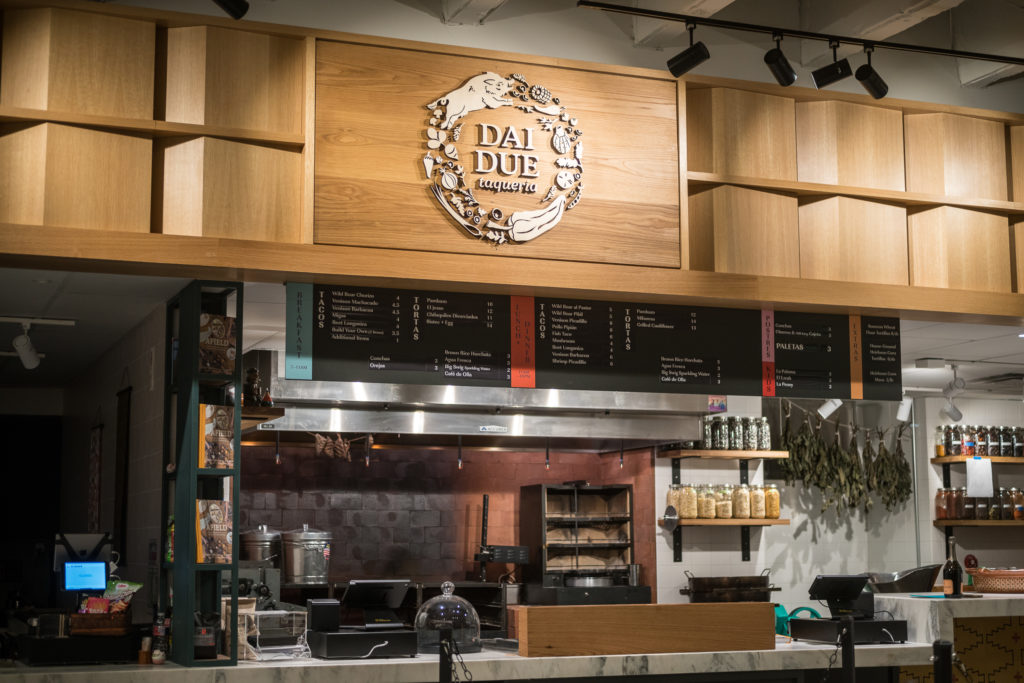 Dai Due Taqueria at FareGround. Photo by Timothy Patrick Clancy.
What item are you most excited about on your menu?
There are two things. Number one is the trumpo, it’s the meat over there that looks like a gyro meat. We call it the trompo al pastor. It's very special because we're cooking over Texas charcoal, which a friend of mine makes here in town. The actual meat is wild boar, it's been brined and marinated. I think everyone loves an al pastor taco, so this is really, really special. Also, there's a torta called a pambazo. It's essentially a torta bread that's been dipped in very spicy chili broth. We take bone broth and infuse it with a lot of chiles. It's really bright red and really thick with a lot of body, kind of like a ramen broth. Then we get the torta, and fill it with wild boar chorizo, potatoes, avocado, and cheese. All of that gets melted together, then dipped in that broth, and then regrilled on a flat top. It’s this bright red sandwich that's crispy, has some char marks, and when you bite into it you get this really nice crispy cabbage and radish taste, too. It’s a very Mexico City style torta. I've yet to see one of those in the city here in Austin so I'm really excited that we're kind of introducing our version of it to people.
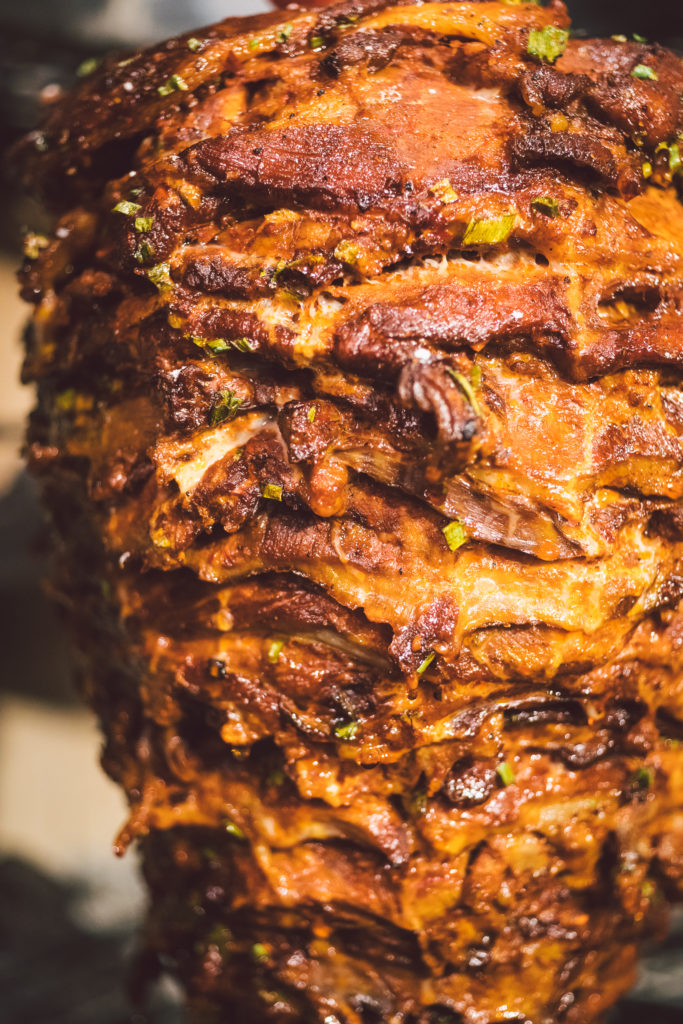 The trompo meat. Photo by Timothy Patrick Clancy.
What is the most surprising thing about working with farms?
I think the most surprising thing to me is that for the longest time people just accepted what was sold. You go to the farmers market, there's carrots, cabbage, cauliflower, garlic, and onions… and you worked with that. However, the relationship between the farmer and the chef has grown so much. Now we partner together, I tell a farmer what I want for my menu, and then they in turn buy seed and try to grow ingredients accordingly. People are growing stuff that you would have never seen grown in Texas previously! There's a girl here in town who's growing extremely rare chiles, chihuacles, and those are even rare in Mexico. So, for them to be grown in Austin is mind-blowing and exciting. I'm working with other people here that are growing some special Mexican herbs, and I have stuff that I brought back from Mexico, a wild mexican spinach.
Tell us about your relationship with JBG?
My first introduction to local farmers was through Johnson's Backyard Garden, back when y’all were extremely small. Brent was at all the Farmers Markets himself, and hosting everybody on the farm very often. So, that's why I still do business with JBG... it's really special to me, and I think a lot of the product is just really amazing. Y’all have grown so much - I hear you deliver to Houston, Dallas, San Antonio… wild.
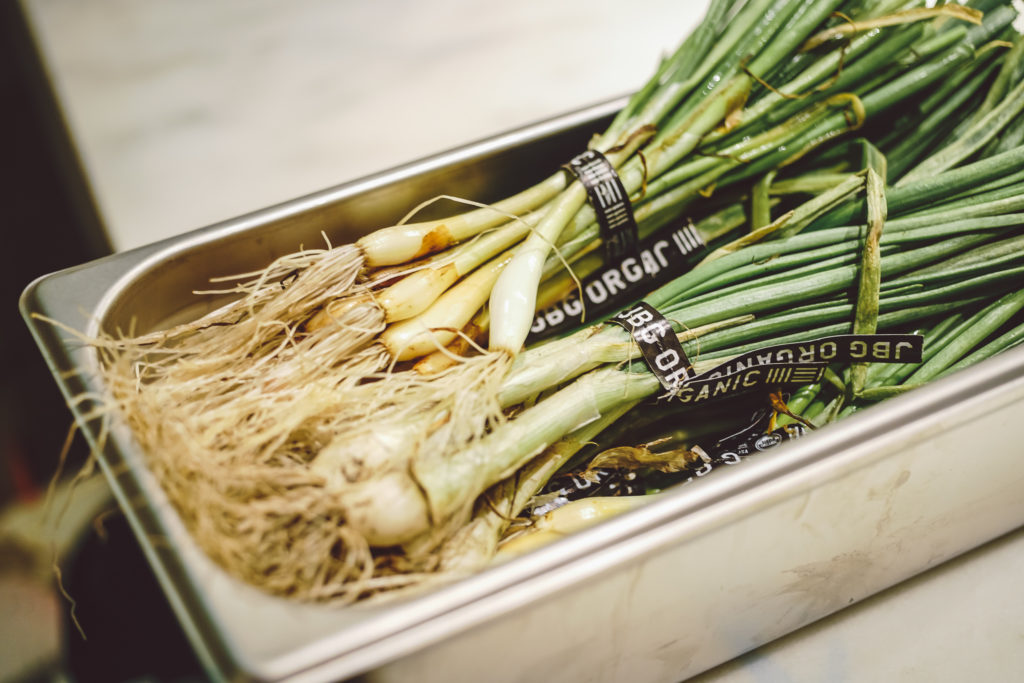 JBG produce in the kitchen. Photo by Timothy Patrick Clancy.
What is the most difficult part about working with farms and sourcing locally?
The most difficult part is the commercial and logistical side of things. People like Farm to Table have changed the game in that it's a one stop shop. You can call them and be like, “I need beets,” and if you have a good relationship with them then they'll send you the best unless you tell them you want some of the cheapest beets they have, and they send you that. It’s a one stop shop, so you aren’t calling 6 different farmers. You aren’t worried about if and when the farm is going to deliver, but on the same token you're paying a premium, so food cost is a big issue. You have to take the extra effort to call all five different farmers instead of just getting the consolidated service from Farm to Table. With farms, schedules and availability can be an issue. It’s first come, first serve, and sometimes when you are planning a menu around a certain veggie and something happens with the harvest or they sell out it can be difficult. However, if you go directly to the farm you’re going to get a better product. There's a lot of farmers that just don't deliver, too, but have amazing product. In a day-to-day operation, it's really hard to break free and go pick up veggies at a farm. You can't really do that all the time… but, there are people who do that in town! Barley Swine’s kitchen goes to the farmers market every Saturday religiously. I admire Bryce and Mark for doing that. It's amazing and there's a special intimacy there. It's hard for everyone to be on that level after long hours the night before in the kitchen.
How do you decide where to source from?
It's always going to be a balance of quality and price. So, if I am using a product that's going to be the showcase of the dish or the meal, then I'm obviously going to be willing to pay a little more premium on a product. If it's something that's going to be cooked and blitzed into a sauce or a garnish that doesn't need to be as robust of a flavor, then you don’t need to spend as much. It's just a give and take. You have to evaluate what the food cost of a plate is versus overall food cost in general, and how much more of a return on your investment you're going to get. If I were to buy Johnson's sweet potatoes versus Tecolote’s, how much better is the flavor for an extra 50 cents? It also depends on availability. I like to provide loyalty to farms, too. If Johnson’s is taking care of me and is always on time, I’m going to keep my commitment to support them. It’s always a relationship, and I feel like in this day and age there are so many farmers that take it really personally. In this day of social media, people’s feelings can really get hurt if you get, let’s say carrots, from someone else. You gotta tread lightly.
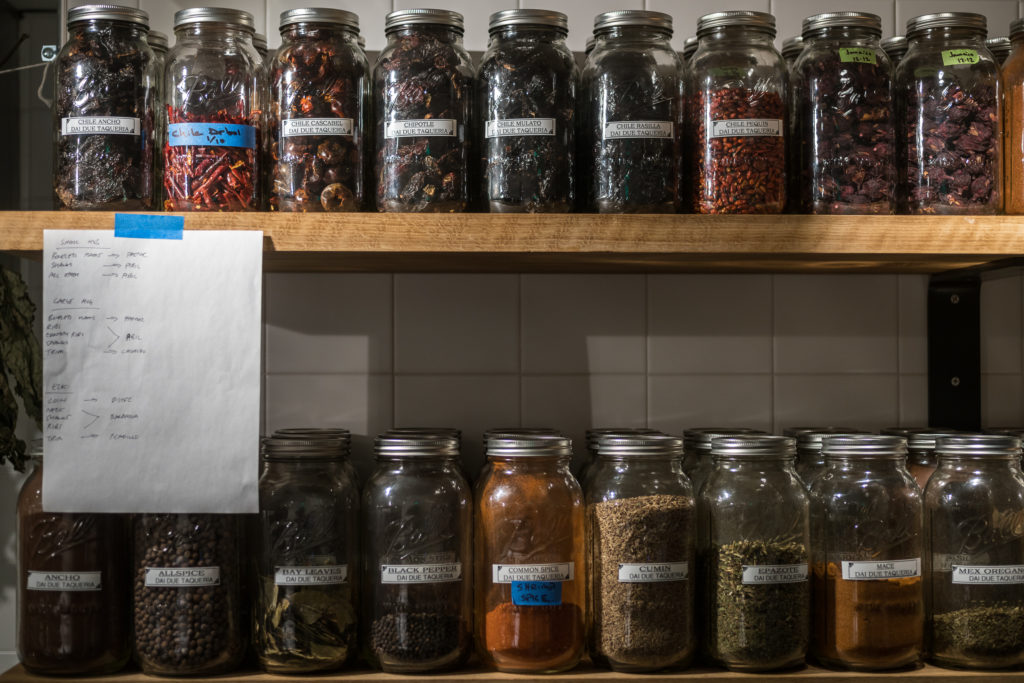 Spices at the Taqueria. Photo by Timothy Patrick Clancy.
What is the best part about working with local farms?
Obviously, I feel like the sustainability aspect and the return to the community. It's a closed loop cycle. It's really great to have the same farmers that are delivering your food be the same people you're feeding. You get to know their family and their kids, and it goes back to the intimate relationship of working with them and them growing special ingredients for you. Going through US Foods or Sysco, I guarantee you're never going to meet the face of where your product comes from. You don’t know what they’re going through to grow that product or how much care is going into that product. So, I feel like to understand the relationship and intimacy of the farm and how it’s being raised is really special. Same thing goes for animals, too. We use feral hog on the menu because it’s delicious, but also an invasive species. The Spanish brought these pigs hundreds of years ago, and they eventually procreated and took over Texas along with other parts of the country. They cause hundreds of millions of dollars of damage to farms, urban residences, and cemeteries all over the place. They are called wild boar, a little misleading, they are actually out in the wild; however, after they are trapped and killed, they are inspected. It’s not like Jesse goes out and hunts feral hog and just brings it in and throws it on the grill... people actually ask that all the time. He’s an amazing hunter and goes often, but he doesn’t kill these hogs. It’s all about sustainability, there’s tons of feral hog and they are delicious. They love acorns, and it adds this nice malty, nutty flavor to the protein that we cook, too.
Is there anything that you think our readers would be surprised to know about day to day in the kitchen?
The amount of technique that goes into making a taco. I feel like the community's been so inundated with, and not to take anything away from Taco Deli or Torchy's, places that pump out a lot of tacos everyday. You go and wait in line and get your tacos ten minutes later, not to say they're not good, but I don't think the amount of technique and care that's going into making those is on the same level of what we're doing here. We're bringing in Mexican heirloom corn that gets cooked, ground, and made into fresh tortillas daily. It's a lot different than having a truckload of tacos dropped off, and you just reheat them. In my opinion, a taco is only as good as the tortilla it’s served on. You can have a delicious filling, but if the tortilla that’s holding it together is falling apart… it’s not that great. The taco was founded on corn, and that’s the backbone of it all. So we really prize ourselves on our masa program. Day to day, the amount of technique that goes into the sauces, the meat, the butchery… everything.
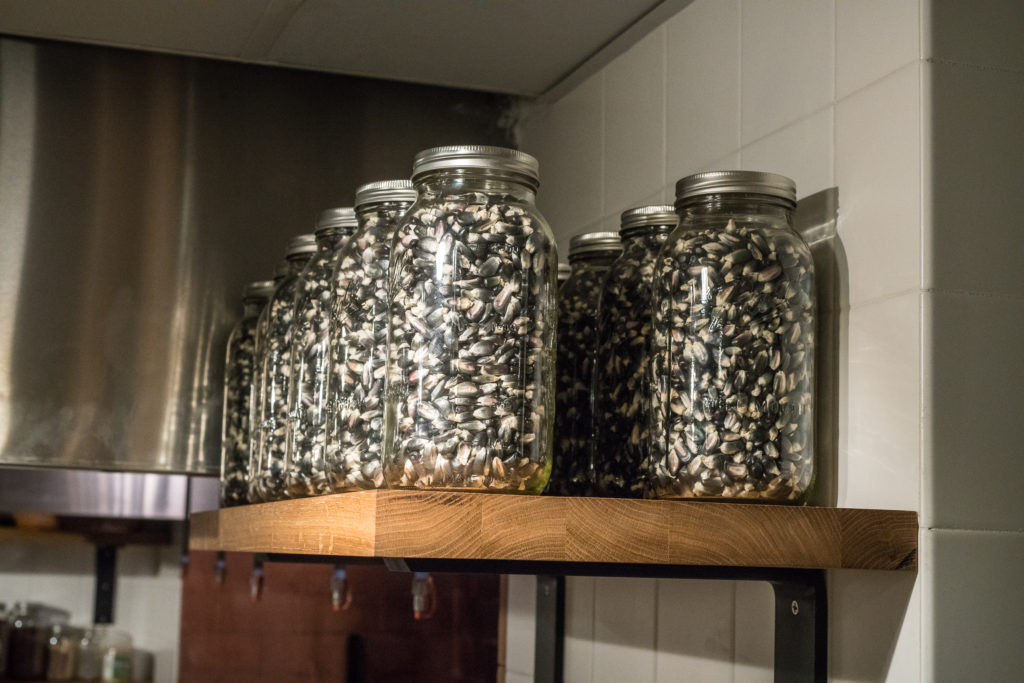 Heirloom corn. Photo by Timothy Patrick Clancy.
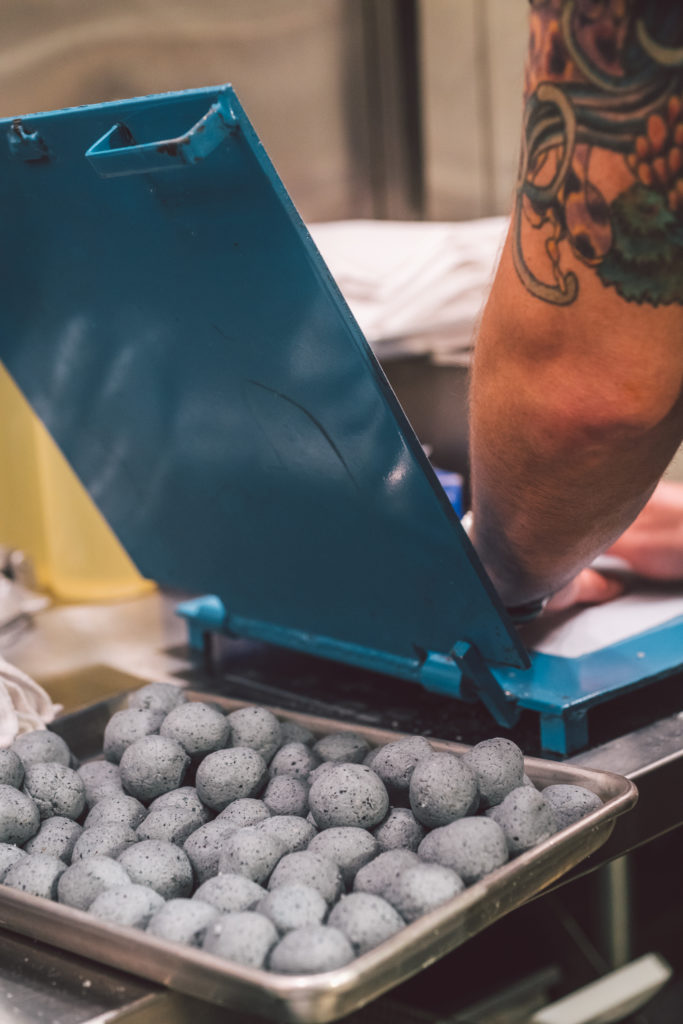 Tortilla making process. Photo by Timothy Patrick Clancy.
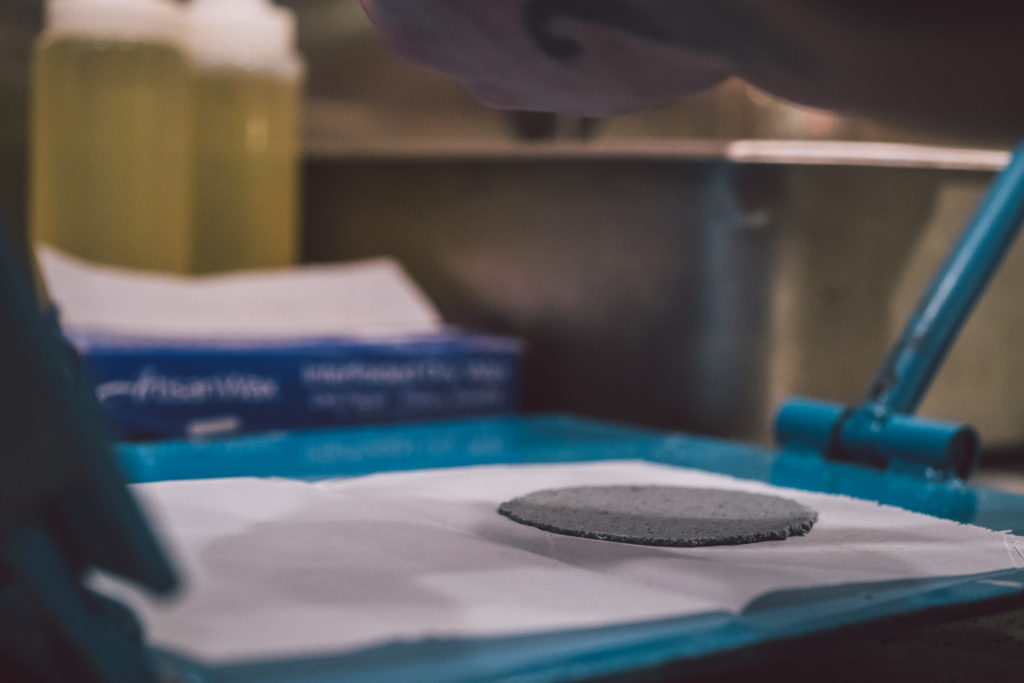 Tortilla making process. Photo by Timothy Patrick Clancy.
What’s your favorite vegetable to work with and least favorite?
Easy - I love chiles. I grew up eating chiles with my parents influence. Even as a kid I was eating raw habaneros macerated in lime and salt. Cooking with chiles is really special to me. I love carrots, and I really love corn obviously. It’s also really special to me, and I relish all the different ways it’s used. My least favorite is dandelion greens. I’ve tried cooking them tons of different ways, but they are just a little too bitter for me.
What advice would you give to a home chef who is trying to learn to cook with more seasonal vegetables?
I would say go to the farmers market and pick up something you have never cooked with before. Get on the internet and use it as a resource or use food magazines, like Bon Appetit and Food & Wine. They always have a lot of the latest food recipes and trends for seasonal vegetables. There's a lot of creative stuff that their staff puts together for recipes... it's really inventive and delicious. For savory cooking it doesn't need to be quite as accurate, and you can improvise a lot more. Be adventurous!
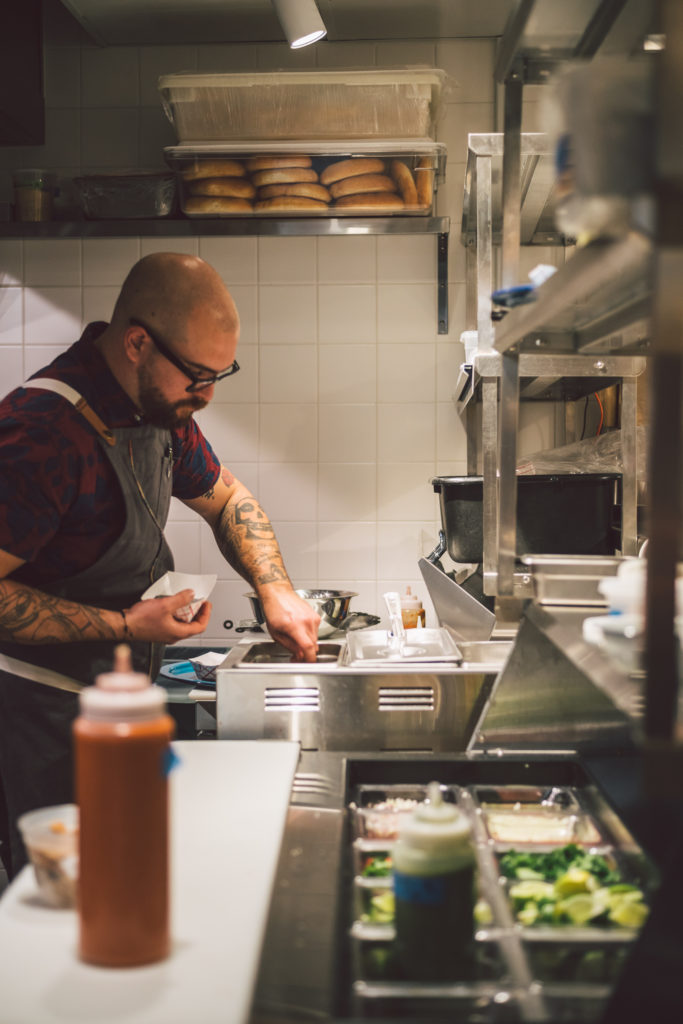 Kitchen scenes at the Taqueria. Photo by Timothy Patrick Clancy.
Any quick recipe or technique you’d like to share with our readers (with something in season)?
I really think right now sweet potatoes are really, really delicious. Something that we're doing on our cochinita pibil taco is pickling them fresh. So, since we don't have red onion right now, we're using sweet potatoes, julienned fresh and then pickled with chile piquin. That pickled sweet potato goes as a garnish on the taco, and it makes an amazing pickled item. My Sous chef, Mike Diaz, came up with the idea. Give it a try!
A huge thank you to Gabe Erales for taking the time to speak with us this week and Timothy Clancy for the amazing photos! Find more photos on his site or on his Instagram.
WEEK 3 IN PHOTOS
01/19/18 — Heydon Hatcher
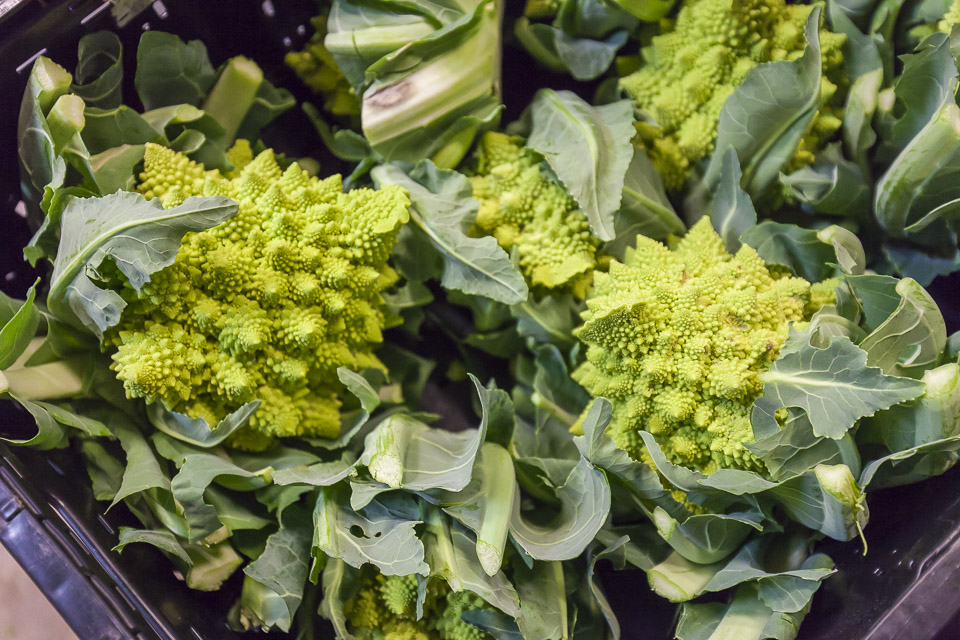 Romanesco. Photo by Scott David Gordon.
This week was COLD. Everyone pitched in on Monday to harvest before the freezing weather arrived. We banded together and worked until dusk, and gathered enough veggies for the rest of the week. Then the harvest crew took off Tuesday and Wednesday, while the packing crew continued cruising through their work even on the freezing snow day! Damage-wise, looks like the veggies fared alright! Stay warm and see you at the markets this weekend!
 Packing crew braving the cold. Photo by Scott David Gordon.
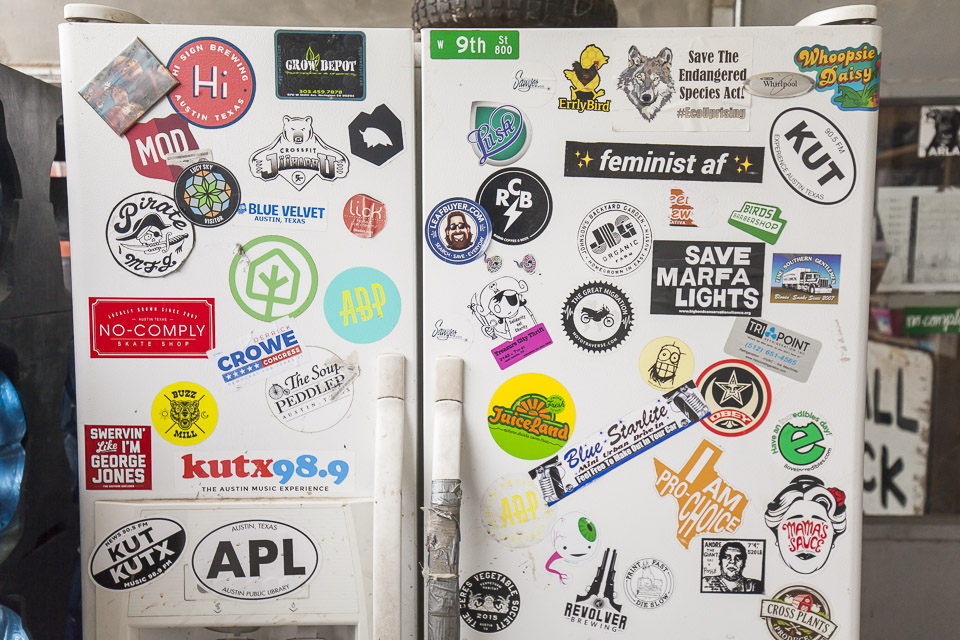 OIur barn fridge filling up with stickers. Photo by Scott David Gordon.
 Frozen grill on the delivery vehicle. Photo by Scott David Gordon.
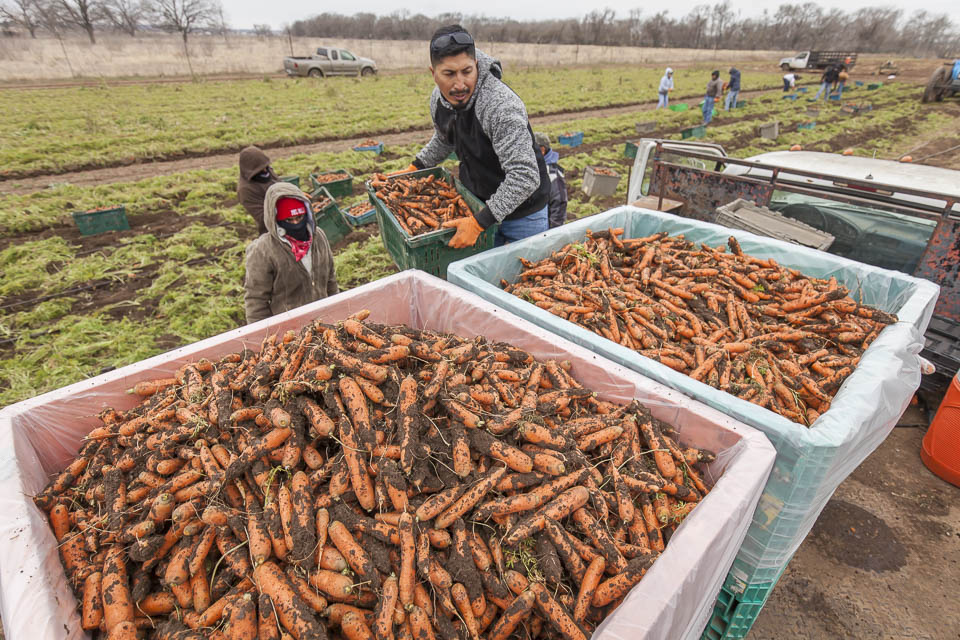 Harvesting carrots on a freezing cold day. Photo by Scott David Gordon.
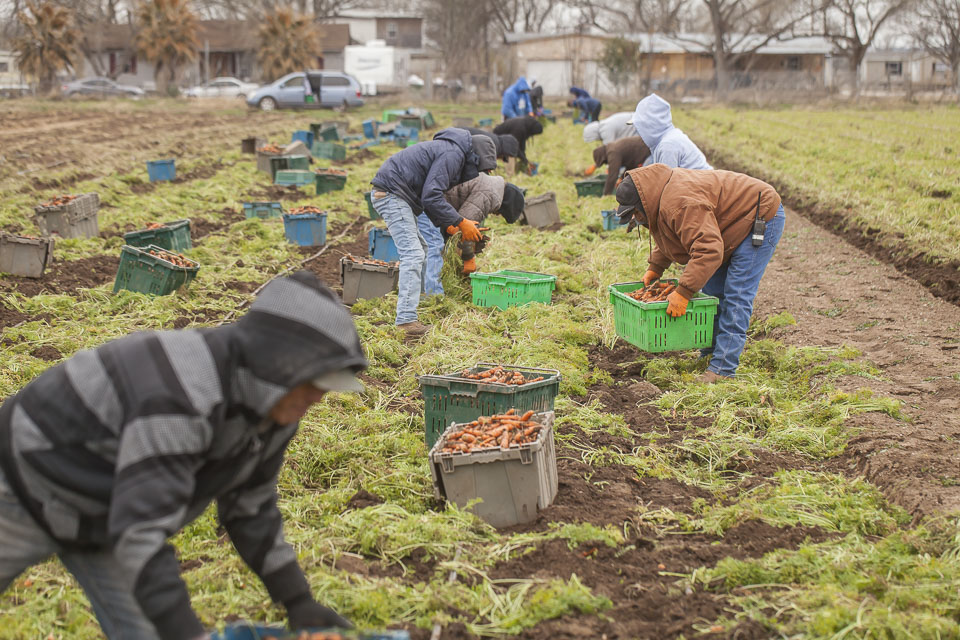 Everyone harvesting carrots since everything else is too frozen. Photo by Scott David Gordon.
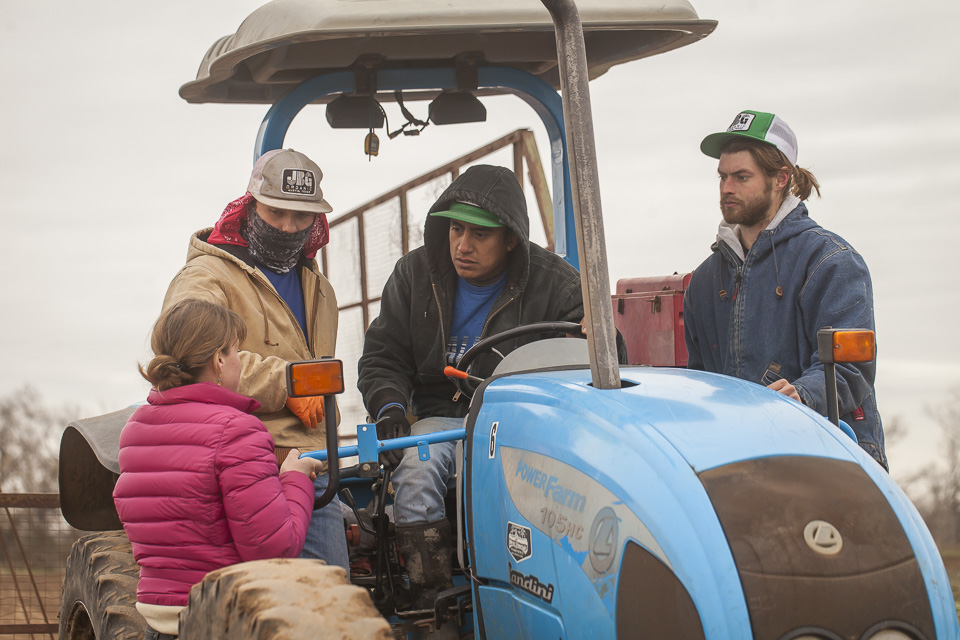 Farm meeting. Photo by Scott David Gordon.
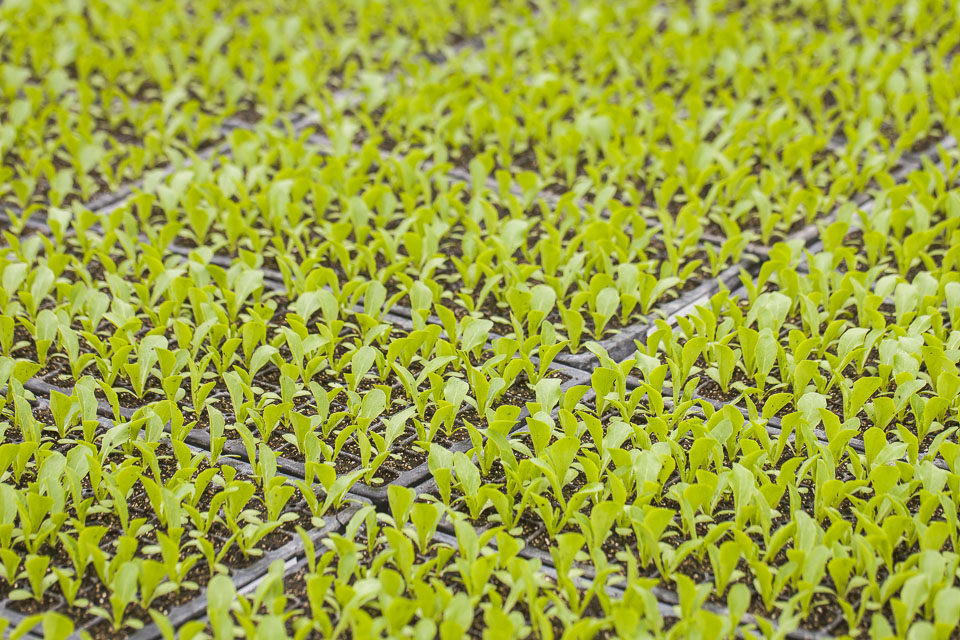 Transplants. Photo by Scott David Gordon.
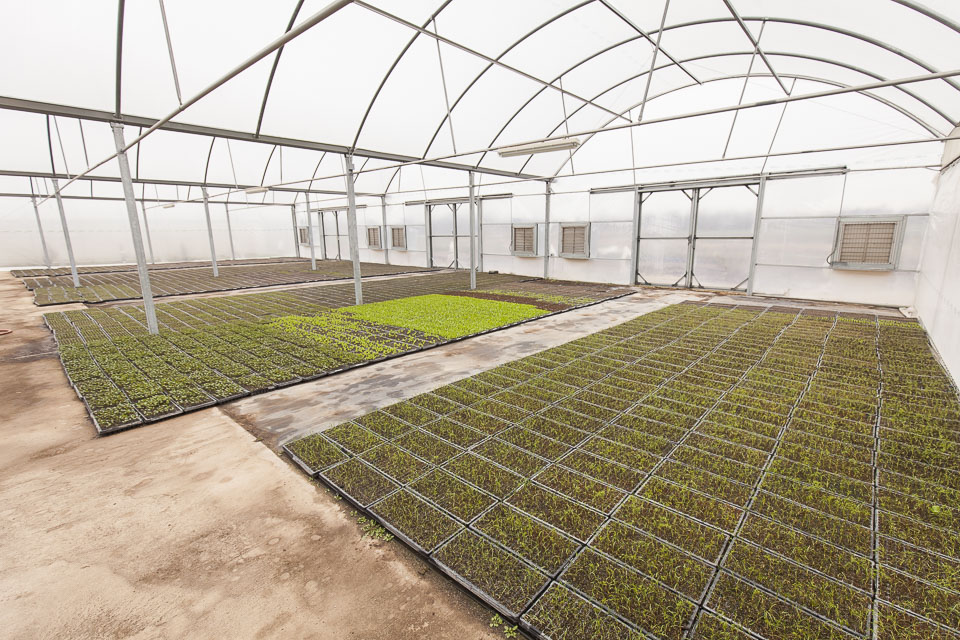 Tons of transplants in the greenhouse. Photo by Scott David Gordon.
A SALAD THING
01/18/18 — Heydon Hatcher
Recipe and Photo by Mackenzie Smith
Megan Winfrey said something about culinary genius when I shared a picture of this salad thing on Instagram yesterday afternoon. Blushing (and swooning; Megan is so cool), I quickly assured her this meal had less to do with genius and more to do with Sunday prep.
I keep a few ingredients available for meals that come together very quickly. As I typed my response, I realized my take-10-minutes-and-compose-a-pretty-salad thing is more formulaic than anything.
![]()
Full-fat Greek yogurt + grain + green + roasted veg + avocado + citrus + egg + something crunchy + flaky sea salt + one more color = a pretty salad thing.
When I am doing life the way I should, I roast a big batch of veggies on Sunday afternoon. As they sizzle in the oven, a few cups of quinoa, farro or brown rice simmer on the stove while a dozen eggs boil for 6.5-7 minutes, all to to stow away for the week ahead.
A quick swoop of a heaping tablespoonful of yogurt onto the plate before loading it with veggies is a creamy punch of tang to everything I pile on top. Yesterday’s lunch had it all, but there is always room to riff:
Shaving one or two rainbow carrots into a quick salad is fun for another burst of color -- these were marinated in meyer lemon, maple syrup, olive oil and salt. Grapefruit is such a treat this time of year, so I try to make sure a few slices or supremes land in a meal a day at the peak of their season.
Right now I have pecans, pepitas, sesame and walnuts in glass jars out in my kitchen to sprinkle on everything for crunch and protein. This dish needed more green, so raw pepitas were sprinkled on top. Sometimes the only crunch around is the last of a bag of tortilla chips (dare I say, hot cheetos!) and those will be sprinkled on top just as delicately as the nuts and seeds. I keep a jar of dried cornflowers out to sprinkle on everything. I’ve heard they are good for eye health, but I use them because I am delighted by their periwinkle hue.
When I have an abundance of herbs, and those will go into the salad, either sprinkled on top and mixed in with the grains. All this to say, starting your week with cooked grains, roasted veggies and boiled eggs at the ready is a good foundation for genius salad thing math. Choose your own adventure, y’all!
Megan Winfrey said something about culinary genius when I shared a picture of this salad thing on Instagram yesterday afternoon. Blushing (and swooning; Megan is so cool), I quickly assured her this meal had less to do with genius and more to do with Sunday prep.
I keep a few ingredients available for meals that come together very quickly. As I typed my response, I realized my take-10-minutes-and-compose-a-pretty-salad thing is more formulaic than anything.
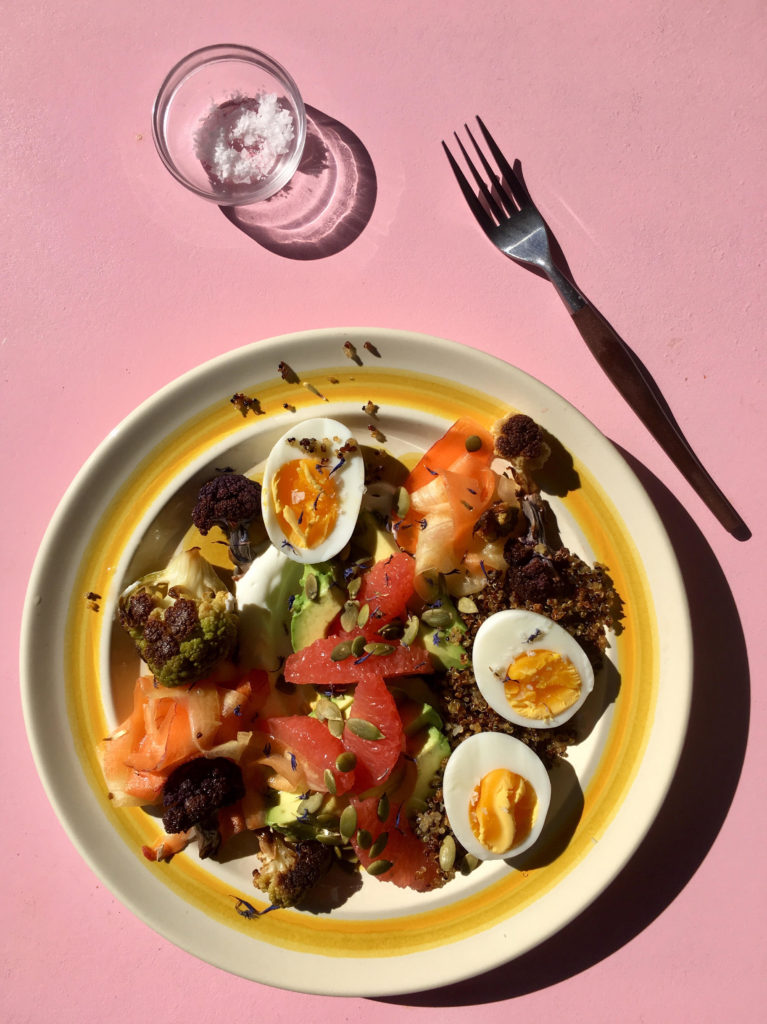
Full-fat Greek yogurt + grain + green + roasted veg + avocado + citrus + egg + something crunchy + flaky sea salt + one more color = a pretty salad thing.
When I am doing life the way I should, I roast a big batch of veggies on Sunday afternoon. As they sizzle in the oven, a few cups of quinoa, farro or brown rice simmer on the stove while a dozen eggs boil for 6.5-7 minutes, all to to stow away for the week ahead.
A quick swoop of a heaping tablespoonful of yogurt onto the plate before loading it with veggies is a creamy punch of tang to everything I pile on top. Yesterday’s lunch had it all, but there is always room to riff:
Shaving one or two rainbow carrots into a quick salad is fun for another burst of color -- these were marinated in meyer lemon, maple syrup, olive oil and salt. Grapefruit is such a treat this time of year, so I try to make sure a few slices or supremes land in a meal a day at the peak of their season.
Right now I have pecans, pepitas, sesame and walnuts in glass jars out in my kitchen to sprinkle on everything for crunch and protein. This dish needed more green, so raw pepitas were sprinkled on top. Sometimes the only crunch around is the last of a bag of tortilla chips (dare I say, hot cheetos!) and those will be sprinkled on top just as delicately as the nuts and seeds. I keep a jar of dried cornflowers out to sprinkle on everything. I’ve heard they are good for eye health, but I use them because I am delighted by their periwinkle hue.
When I have an abundance of herbs, and those will go into the salad, either sprinkled on top and mixed in with the grains. All this to say, starting your week with cooked grains, roasted veggies and boiled eggs at the ready is a good foundation for genius salad thing math. Choose your own adventure, y’all!
CSA BOX CONTENTS WEEK OF JAN 15TH
01/16/18 — Scott
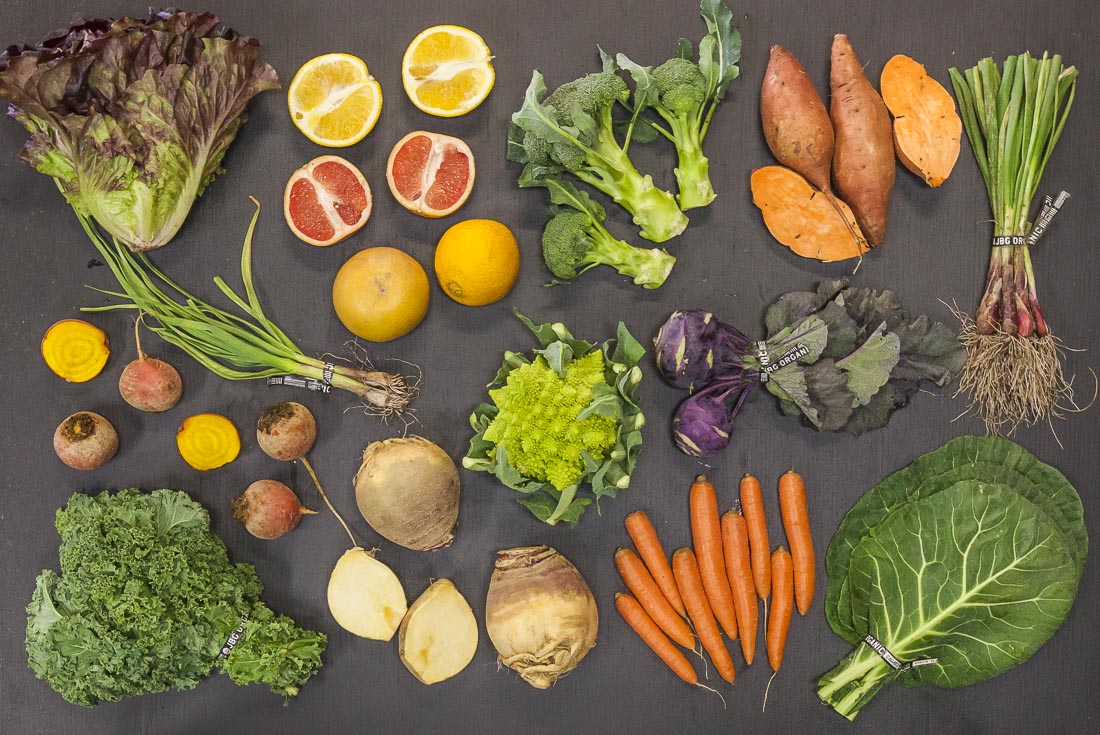 CSA Box Contents Week of Jan 15th
Large Box
Brussels Sprouts
Carrot, Orange
Cauliflower
Citrus, Mixed
Greens, Collards
Greens, Kale, Curly
Lettuce, Romaine
Onion, Spring Red
Potato, Sweet
Radish, Purple Daikon
Squash, Butternut
Turnip, Scarlett
Brussels Sprouts
Carrot, Orange
Cauliflower
Citrus, Mixed
Greens, Collards
Greens, Kale, Curly
Lettuce, Romaine
Onion, Spring Red
Potato, Sweet
Radish, Purple Daikon
Squash, Butternut
Turnip, Scarlett
Medium Box
Brussels Sprouts
Carrot, Orange
Citrus, Mixed
Greens, Collards
Lettuce, Romaine
Onion, Spring Red
Potato, Sweet
Radish, Purple Daikon
Squash, Butternut
Brussels Sprouts
Carrot, Orange
Citrus, Mixed
Greens, Collards
Lettuce, Romaine
Onion, Spring Red
Potato, Sweet
Radish, Purple Daikon
Squash, Butternut
Small Box
Garlic, Green
Greens, Collards
Greens, Kale, Red
Kohlrabi, Purple
Lettuce, Red Leaf
Potato, Sweet
Turnip, Rutabaga
Garlic, Green
Greens, Collards
Greens, Kale, Red
Kohlrabi, Purple
Lettuce, Red Leaf
Potato, Sweet
Turnip, Rutabaga
Individual Box
Broccoli
Greens, Collards
Lettuce, Red Leaf
Potato, Sweet
Turnip, Scarlett
Broccoli
Greens, Collards
Lettuce, Red Leaf
Potato, Sweet
Turnip, Scarlett
WEEK 2 IN PHOTOS
01/12/18 — Heydon Hatcher
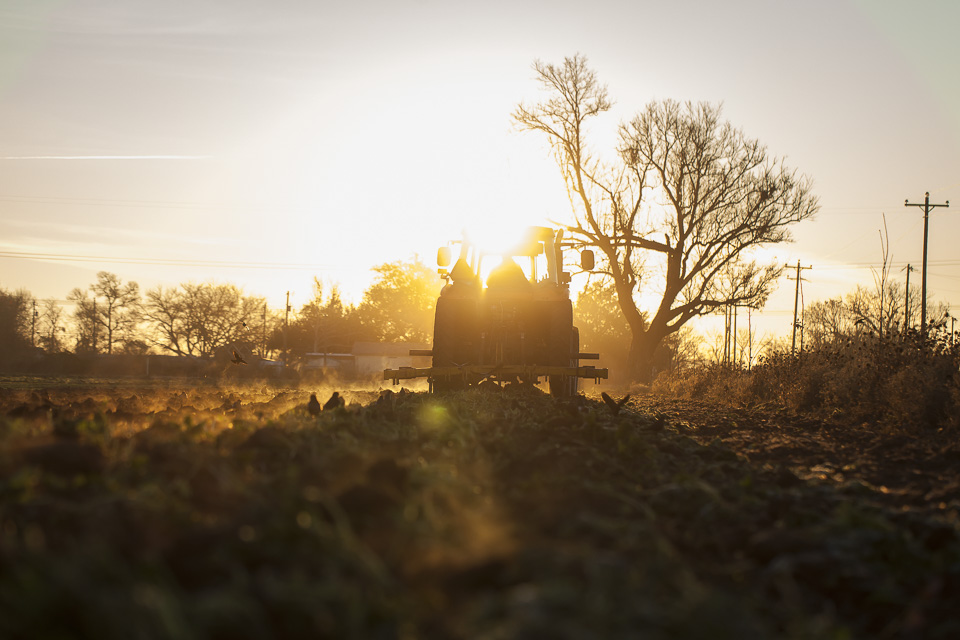 Montana at the helm. Photo by Scott David Gordon.
Week 2 has us enjoying Spring-like weather, transplanting, reveling in the year past, and planning for the one ahead. We are prepping beds and readying for a busy planting season ahead. Our CSA boxes are of optimal quality and beauty currently. Have you heard that if you join the CSA this month, you get your first box free? Check it out here.
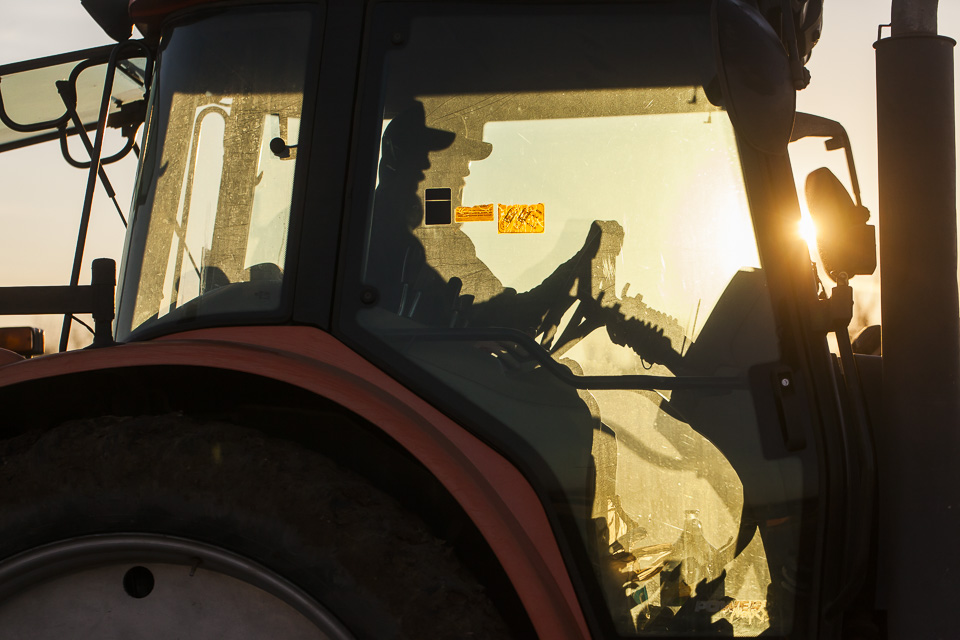 Montana at the helm. Photo by Scott David Gordon.
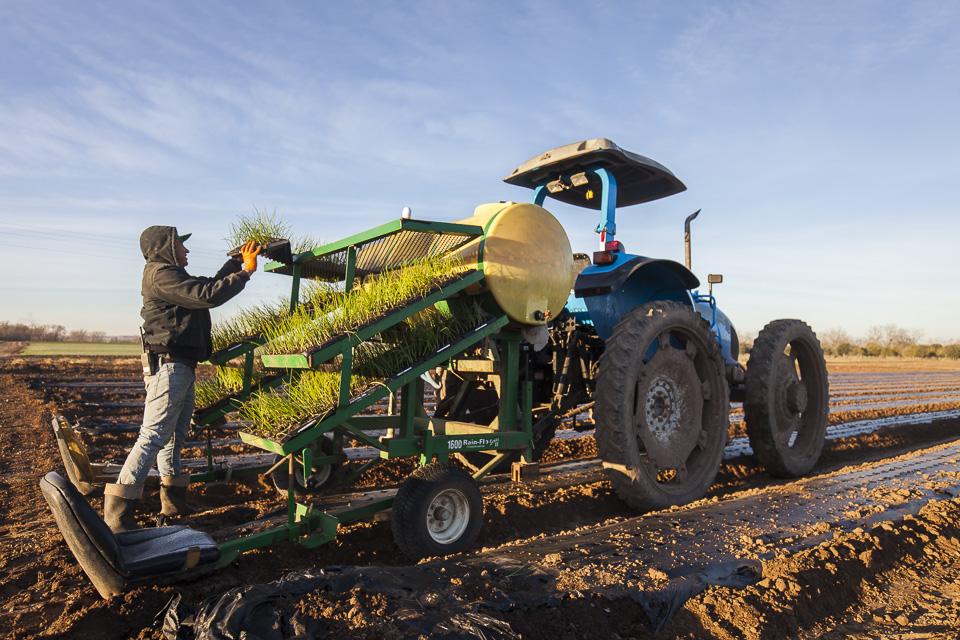 Getting the transplants ready. Photo by Scott David Gordon.
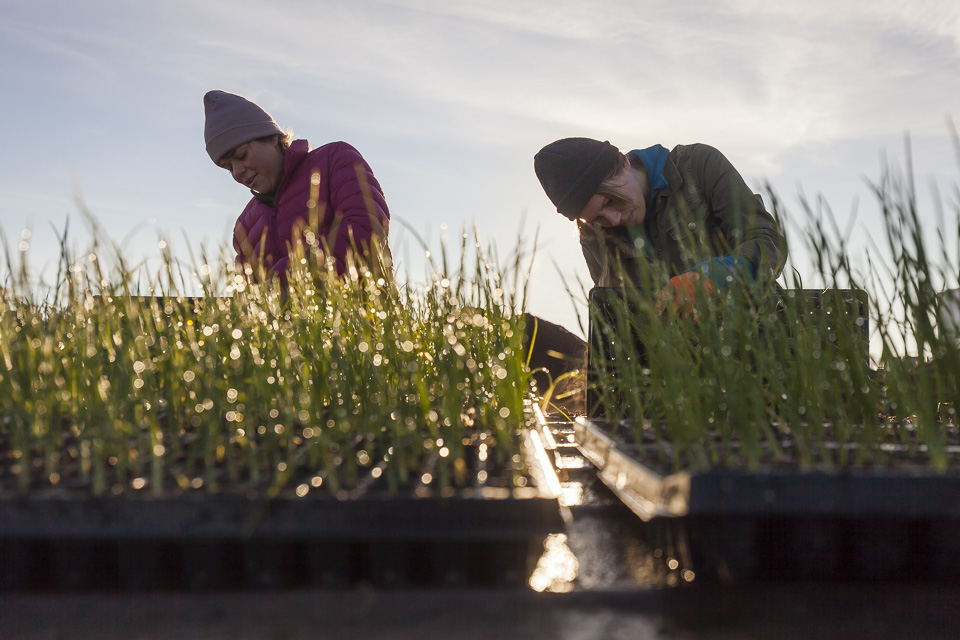 Transplant work. Photo by Scott David Gordon.
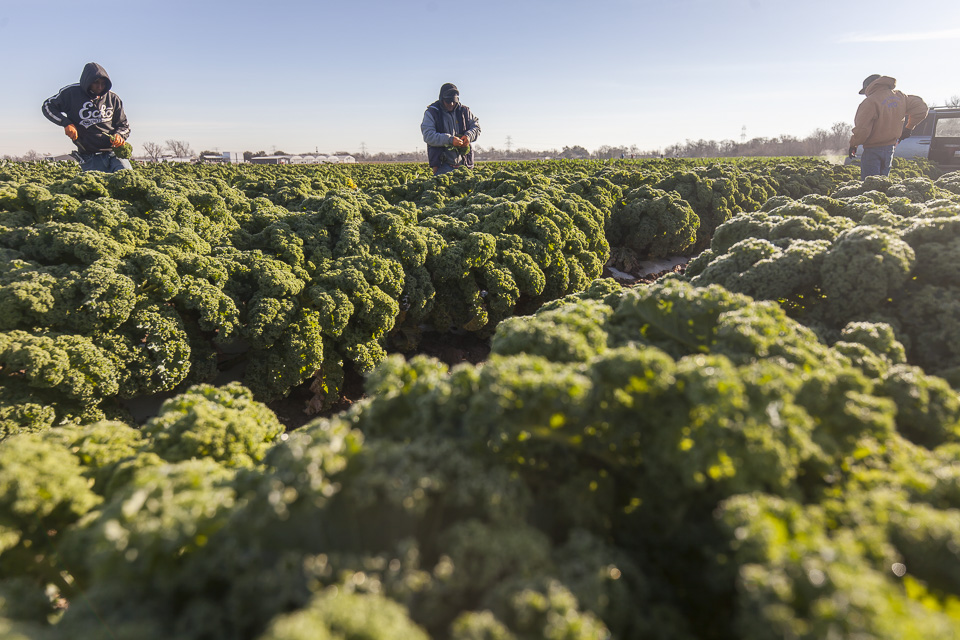 Kale field glory. Photo by Scott David Gordon.
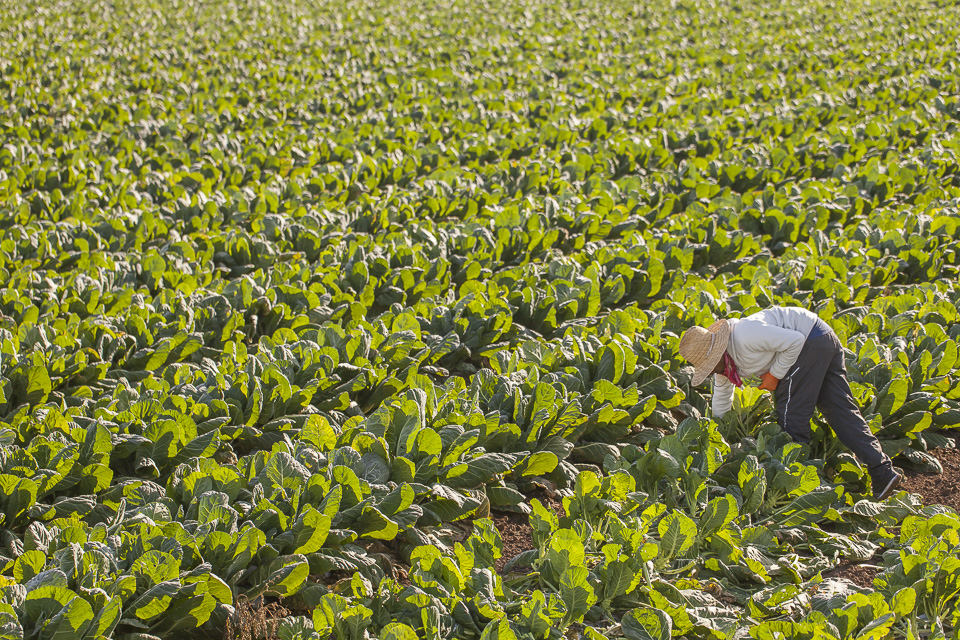 Harvesting. Photo by Scott David Gordon.
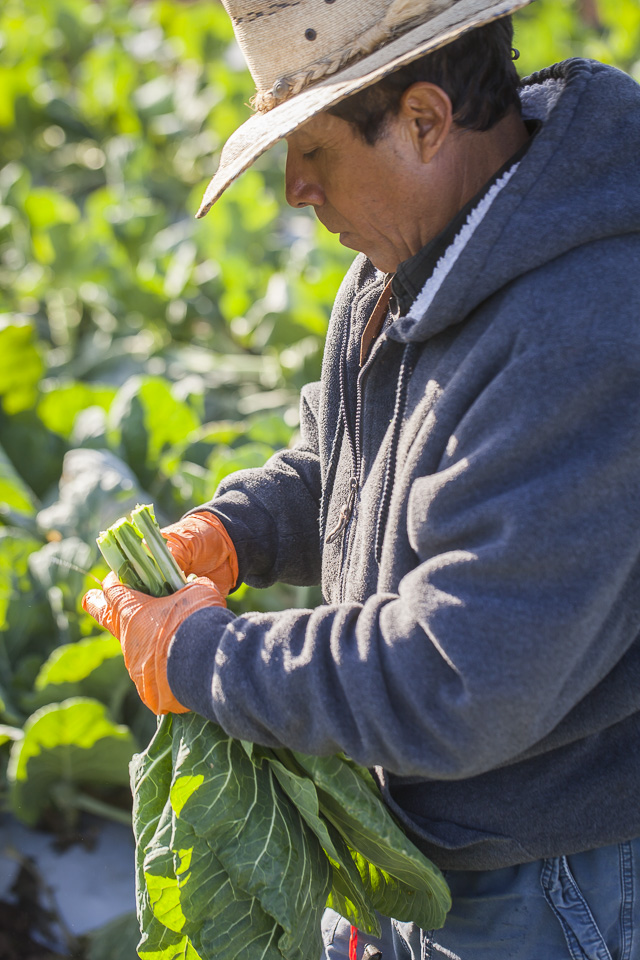 Tying up collard bunches. Photo by Scott David Gordon.
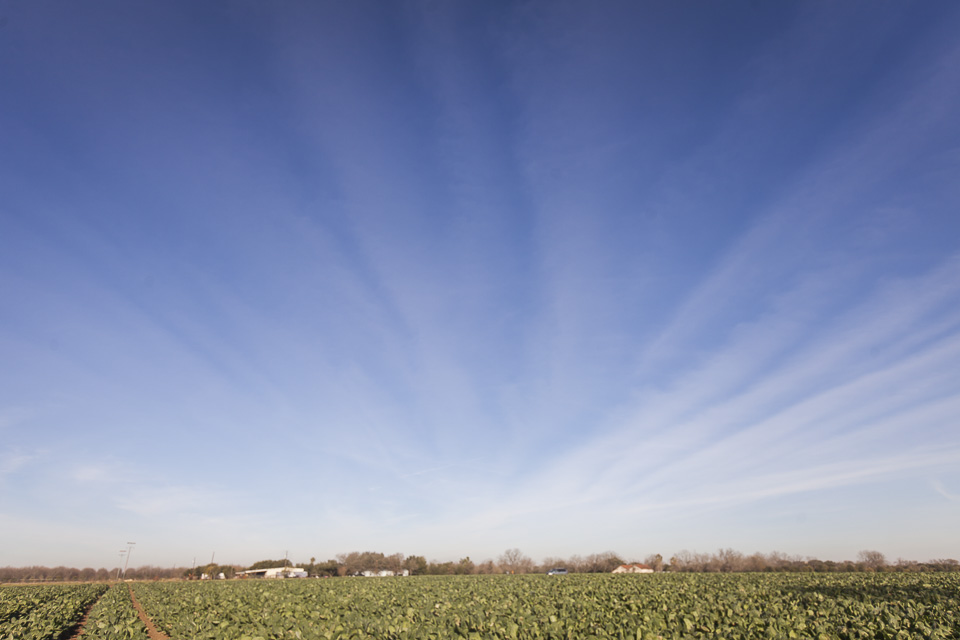 Vast blue skies. Photo by Scott David Gordon.
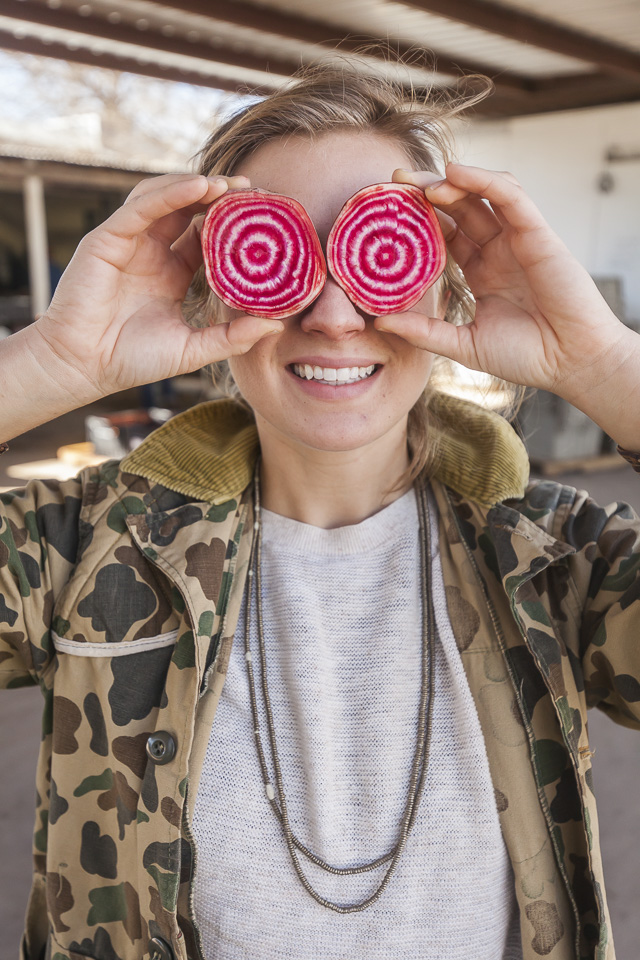 Ada and her chioggia eyes. Photo by Scott David Gordon.