 0 ITEMS IN CART

CSA BOX CONTENTS WEEK OF JAN 16TH
01/17/17 — Scott
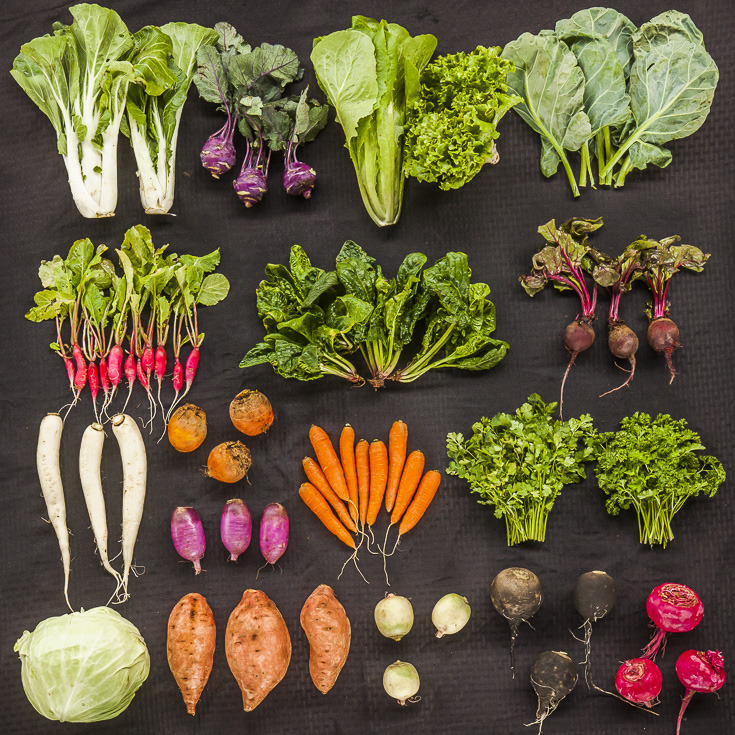 CSA Box Contents Week of Jan 16th
Large Box
Beet, Red
Brussels Greens
Brussels Sprouts
Cabbage, Green
Carrot, Orange
Greens, Arugula
Greens, Spinach
Greens, Tatsoi
Herb, Parsley, Curly
Potato, Sweet
Radish, Black Spanish
Radish, Red
Turnip, Purple Top
Beet, Red
Brussels Greens
Brussels Sprouts
Cabbage, Green
Carrot, Orange
Greens, Arugula
Greens, Spinach
Greens, Tatsoi
Herb, Parsley, Curly
Potato, Sweet
Radish, Black Spanish
Radish, Red
Turnip, Purple Top
Medium Box
Beet, Red
Bok Choy
Brussels Greens
Cabbage, Green
Carrot, Orange
Greens, Mizuna
Greens, Salad Mix
Greens, Spinach
Herb, Cilantro
Potato, Sweet
Radish, Green Meat
Beet, Red
Bok Choy
Brussels Greens
Cabbage, Green
Carrot, Orange
Greens, Mizuna
Greens, Salad Mix
Greens, Spinach
Herb, Cilantro
Potato, Sweet
Radish, Green Meat
Small Box
Brussels Greens
Cabbage, Green
Carrot, Orange
Greens, Spinach
Herb, Cilantro
Lettuce, Mixed head bag
Onion, Green
Radish, Purple Daikon
Brussels Greens
Cabbage, Green
Carrot, Orange
Greens, Spinach
Herb, Cilantro
Lettuce, Mixed head bag
Onion, Green
Radish, Purple Daikon
Individual Box
Beet, Red
Cabbage, Green
Carrot, Orange
Greens, Chard, Rainbow
Lettuce, Mixed head bag
Turnip, Scarlett
Beet, Red
Cabbage, Green
Carrot, Orange
Greens, Chard, Rainbow
Lettuce, Mixed head bag
Turnip, Scarlett
MEET JOHANNES COURTENS: A MAN ROOTED IN AGRICULTURE
01/13/17 — Heydon Hatcher
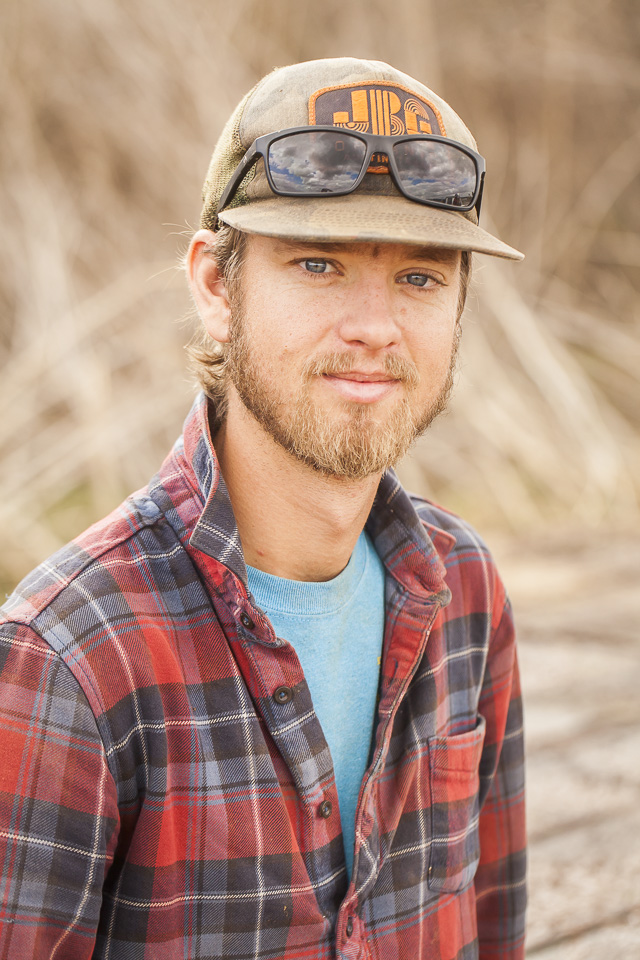 Johannes Courtens. Single and ready to mingle.
A long, long time ago, Brenton Johnson was a government worker, stuck in a stale office, daydreaming about rows of carrots, blue skies, and secretly researching about how to farm when time permitted. Before we delve into that epoch, though, imagine... you have been invited to enjoy a home-cooked meal at Brenton’s house. You arrive, and as you are ogling his vast cookbook collection, you realize that he has pulled over 10 cookbooks to research all the possible ways that you could make, oh let’s say... spaghetti. He ponders each chef’s expert admonition on how to construct the best spaghetti sauce and pasta, decides which instructional pieces he deems most delicious, shuts all the books, and gets to work. This is exactly how Brenton Johnson went about starting the farm. The JBG approach to farming has foundations in a large handful of agricultural superstars' work including: Eliot Coleman of New Organic Farmer, Farmer John of Angelic Organics in the Chicago area, Andrew Stout of Full Circle Farm outside of Seattle, Nigel Walker of the Californian Eatwell Farm, John Jeavon's agricultural literature, Full Belly Farm in the Capay Valley of California, and Boston area’s Brookfield Farm.
One person and farm that inspired and served as Brenton’s “farm idol” and “farm model” is Jean-Paul Courtens and his farm, Roxbury Farm, in the Hudson Valley. Jean-Paul, who was born and raised in Amsterdam, initially studied to be an art therapist. In the midst of being drafted to fight in the Vietnam War with the Dutch forces, he was introduced to Rudolf Steiner’s anthroposophical philosophy, and Warmonderhof, a small 4-year agricultural school based in biodynamics that integrates education on farming practices as well as marketing and economic elements. His deep-seated love of botany flourished and he began his journey into the depths of the agriculture world. After finishing school, he decided Holland was no longer a good fit for him, and eventually ventured across the pond to the lush Hudson Valley. He founded Roxbury Farm, a biodynamic organic farm.
During a time of reorganization at Roxbury, a farm notorious for planning meticulously during the off-season, the farm created a crop and harvest manual that they decided to publish online. In a time where there was a shortage of information available to those who took an interest in medium-scale farming, these manuals offered enlightened insight into what it takes to run a midsize farm. This information spread the world-round and farmers internationally learned about the farming process from these manuals. Where some people would safeguard company secrets, Roxbury’s business model inherently believes in sharing information, as they thought then and think now that a robust agricultural industry was/is ultimately good for business, plus an educated customer base is beneficial for everyone. This manual and Jean-Paul’s sage counsel was integral to Brenton and the advent of JBG.
 Brenton and Johannes in December 2015.
Thus, when Johannes Courtens, Jean-Paul’s son, took a season off in the winter of 2015, disillusioned with his foray into the solar industry, a new relationship burgeoned in the Roxbury-JBG saga. He spent about 5 months on the road and with a tip from his father to check out JBG, popped down to Austin to see what Texas had to offer. He wanted more experiences with farms similar to his family’s, and since JBG was a bit bigger, operated year-round, and had more employees, he felt like there was more to learn and explore. Jump to the present, Johannes is working with us for a couple months during the spring season. We are elated to have him as a part of the farm-team. So, please take a moment to learn more about his story, and help us welcome him to the Austin community!
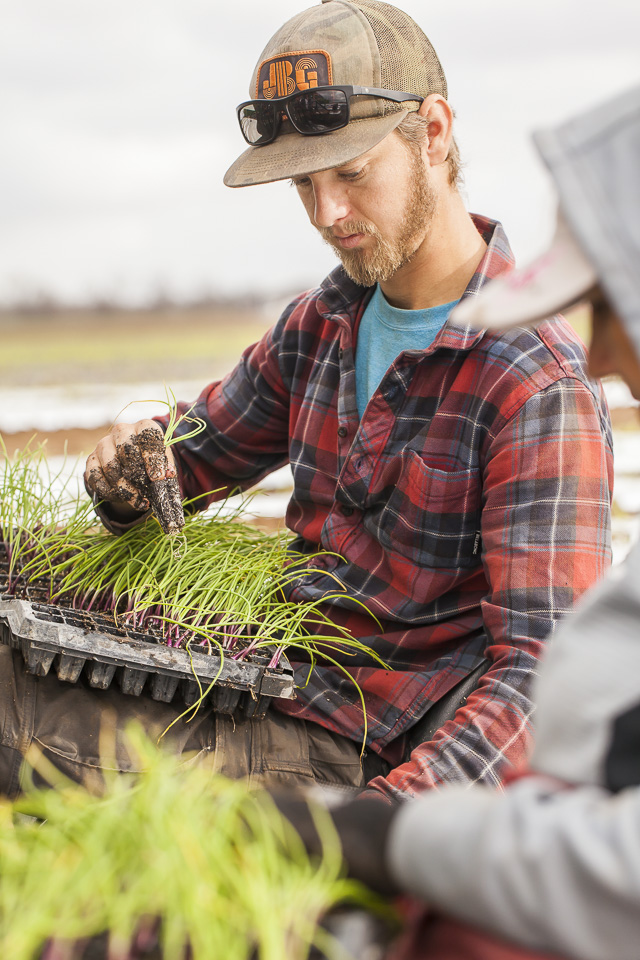 Johannes planting onions. Photo by Scott David Gordon.
Where did your grow up? I’m from upstate NY. I grew up in the Hudson Valley.
Do you have a big family? I do have a big family, though my dad only has one sister... My mom, on the other hand, has 8 brothers and sisters, from New York. I have 21 cousins on my mom’s side! My dad is from Holland, he grew up in the Netherlands and moved to Camp Hill, Minnesota where he met my mom. My parents divorced when I was 10. My family has a wonderful relationship now post-divorce, fortunately. In my immediate family I have two siblings, a brother and a sister. I’m the middle child.
Can you tell us a little about your family’s farm, Roxbury? It’s run and operated by Jody, my stepmother. It was founded by my father. The farm celebrated its 25th anniversary this past year... I’m a little older than the farm. It’s a biodynamic CSA farm. Most of our market is just the CSA. We serve about 1200 families in our CSA program, and do about 500 winter shares. We are on 400 acres currently. We are going to close on about 60 more in the coming year. Some of the land is prime vegetable land, and some of it is great for pasture. We’ve taken some stuff out of vegetable land, and put into pasture because it just wasn’t productive. We are huge believers that if you are going to spend the time and labor doing something, and you get mediocre food out of it, it’s not really worth the time. We already have enough work to do on the existing prime land, so we’ve kind of nitpicked what’s best.
We’re able to then use the pasture land to justify a lot of the equipment we need for the cows, some of the sheep, and pigs. We also use a lot of that land for hay and straw. We also produce our own straw, roughly around 200-something bales of bedding straw a year, and also use it in mulching... that means that we can both mulch with plastic, and also with straw, which is also good for the soil. That keeps it more of a closed loop system. Otherwise, to mulch with straw only would be unfeasible, it would be too expensive to buy.
The animals kind of pay for themselves, because we can sell the meat. It’s a break-even operation, honestly. At least at this point, because we aren’t very large. We are able to recycle a lot of the food waste with the animals. The pigs eat a ton of that, but the cows are kind of picky. People love lamb, we sell a ton of it.
We have land that is strictly kept for wild land. It’s kept that way because we want to promote a healthy ecosystem on the property. If we were to clear-cut all the land on the property, it would be nice to use it in the short-term, but we would ultimately worry about compromising too much of the balance. There is a creek neighboring the property, so we don’t want too much of the operation to get too close to the creek for flooding reasons. We are on a hundred year floodplain that has flooded about 4 or 5 times.
Can you tell us what a biodynamic farm is - what are some practices that make a farm biodynamic? First off, we are also a certified organic farm now. The biodynamic element is way more philosophical. We aren’t planting with the moon phases or anything, but we do have some things that we do structurally on the farm. We have managerial elements touching on people’s autonomy on the farm... we’re able to have a work environment where people feel safe. For example, we used to start the day where everyone just gets to it and starts working. Now, we start in the morning with Calendar of the Soul which is written by Rudolf Steiner. For every week in the year, he has a poem… there are hundreds. Jody reads that, and then everyone kind of checks in with each other. People are surprisingly honest, letting you know if they had a bad night or what’s going on in their lives. It’s great because it lets you know where everyone is at. We say it in Spanish, too. We have four women from Mexico working on the farm crew, so one of them says it in Spanish, and that’s the start of our day.
One of the more relevant things that are strictly biodynamic that we do are spray preparations. Preparations were called ‘500’ because Rudolf Steiner wanted to be relevant in the scientific community, but the truth is that there isn’t really any substantial evidence that what we do really makes a difference, but we can say that we have definitely seen differences. One of the things we do is bury cow horns, from lactating cows, and we fill them with manure and bury them underground for the entirety of the winter. I don’t want to get too voodoo here, but we just realize on the farm that there are things that we don’t know about that are not scientific or quantifiable, but we recognize are there. These are different ways that we can have intentions towards showing that we don’t own this land, instead the land is giving to us. We have to also be good to it, for it to be good to us. Some people are very religious about biodynamic farms, we definitely are not. We are very practical. We spray organic sprays for pests, we aren’t against that. We treat our animals with antibiotics, too. We cannot stand animal’s suffering for any reason. It’s a healthy balance between science and spirituality. That’s what Rudolf Steiner intended, and he’s the founder of anthroposophical philosophy - the meeting of agriculture, health, and education.
How does growing up on a farm alter the way that you look at the world around you? There’s always a different way to look at something. No one’s always going to sit around and explain everything to me. At a young age, I figured that out quickly. I had a close friend growing up who was raised on a nearby dairy farm. I would help them out sometimes on their farm. They loved riding around on quads... so one day I went over and we were going to ride on some of them; but alas, one of them wasn’t functioning. The first thing we did was go to my friend’s father, and ask him if he knew what was wrong and/or if he could fix it. He responded that he didn’t know, but if we could fix it, we could ride it. After sitting around blindly banging on things for awhile, we finally figured it out. Through trial and error, we were able to do what we wanted and have some fun that day. It took a long time, but that’s a good example of what it’s like growing up on a farm. There’s never a dull moment, and there’s always a different way to approach a problem. It definitely allows you to think critically about a lot of things. You also learn that different perspectives are always beneficial and good to consider. Someone might have better input than you on an issue that needs solving quickly.
What are you doing here at JBG? The reason I’m here in Austin is to learn a new perspective on the same thing that I’ve been doing. JBG is very similar to Roxbury, growing food for a community, local in scale with pretty awesome technology. It’s also nice to help out with something during the winter. More specifically, I’ve been working with Montana, one of the JBG farm managers, and some of the other crew members. We are trying to develop some transplanting crews to start planting for the season. We’ve done a lot already, but there’s a ton more to do.
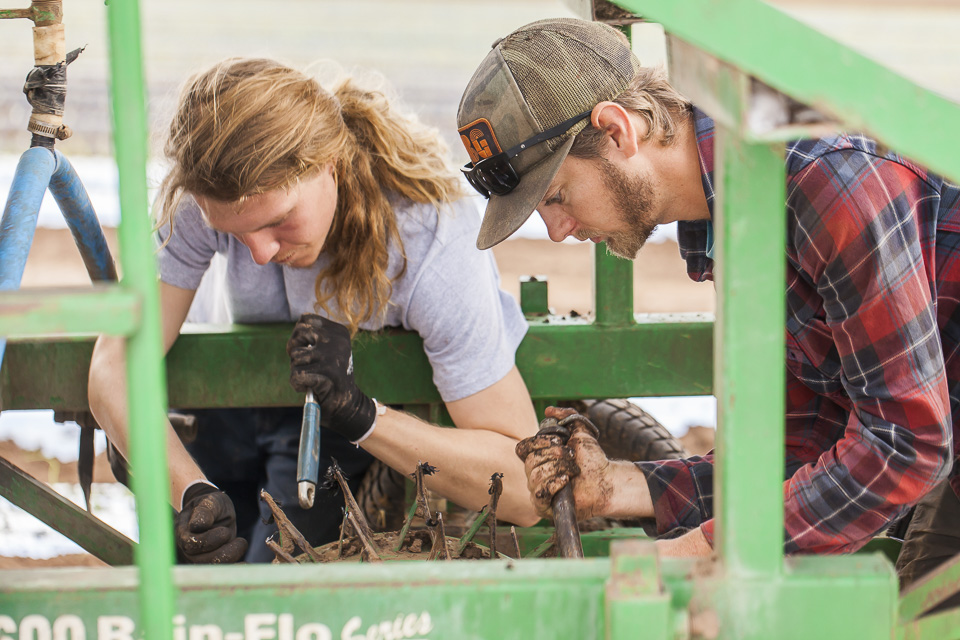 Johannes at work. Photo by Scott David Gordon.
Does Roxbury dabble in wholesale? Can you tell us a little about your CSA? Does Roxbury participate in farmers’ markets? Regarding the first question, that’s actually part of the reason that we are certified organic now, which was new in 2016. It wasn’t necessarily beneficial for us previously, but what we are seeing now is that there is a saturated market and a very niche market. There’s a ton of CSAs in the Hudson Valley. I mean I’ve never seen such a concentration of CSAs except maybe in Northern California. There’s so many farms available. They are mostly small scale, too. So, if we aren’t able to sell our CSA shares, to what our budget needs, we then have to supplement with wholesale.
We do only one market now, we did two before, but we weren’t seeing enough profit. We do some work with wholesalers, but we are mostly market direct wholesalers. We have some cool programs that work with restaurants in NYC, Albany, and the general Hudson Valley, too. They are able to come and pick up produce right from the farm, or sometimes we deliver directly to the restaurants. We’re diversifying right now because it’s necessary. We also sell meat since we grow our meat. That’s definitely an value-added for our customers. We do a meat CSA - people can pick and choose a meat share depending on what they want, how much they want, and also depending on the time of year. With the winter share, we send pre-boxed meat, too.
Most of our CSA sites are market style, and we have a really awesome set of site coordinators. They receive a free CSA for doing the coordinating work, as they are out in their community evangelizing, and keeping the customers coming back time and time again. It’s amazing. Most of our money comes from the CSA. JBG is a year-round farm which changes the game completely. The time periods are just so different with regard to farming in New York and farming down here in Texas.
What do y’all do in the off-season? Travel to Austin! No, but seriously, my parents have done a lot of things in the past. We have a winter share that goes until February, then we are done for a two-month block… the farm goes pretty dormant. We have a full-time hire who works with the animals. He lives on the farm and cares for the animals in the off-season. Though, even he can take on another full-time job in the off-season, and still be able to handle the animal workload.
Over the years, my dad and Jody have done a lot of conferences. For the most part, they go to at least four or five every year. One year, we even went to Fairbanks, AK to talk about what they do. Some conferences have agendas, for example, gentle management of animals or cover crops (cover crops are a hot topic right now!). People have a lot of interest in hearing them talk about their experience and what has worked for us at Roxbury.
We also do a lot of preparation for the next season. Our farm is highly planned. There’s a lot of management during the season, but a lot stuff is very meticulously pre-planned. When we are seeding, when we are planting, etc. is already decided before the season begins. Equipment maintenance happens in the off-season as well as in the early spring before we break ground.
What’s your favorite season of veggies? I love the fall, fall brassicas especially. I love tomatoes, surprisingly, too. They aren’t my favorite to harvest, but they definitely are my favorite to have fresh. Mid-summer veggies, too. I love sweet corn. Sweet corn is kind of the top... it’s 9-weeks/successions of sweet corn. It’s a pain to grow, but once it comes up and fruits out, it’s really nice.
Sweet, juicy, fresh, organic sweetcorn! #roxburyfarmcsa #certifiedorganic #delicious #sweetcorn
A photo posted by Johannes Courtens (@johannescourtens) on
If you were a veggie, what would you be? An onion. I would definitely be a storage variety onion, too, not a fresh onion - those are soft and don’t last at all. I’ve got many layers.
Why does buying locally matter and why should people care about farms? I was working in the renewable energy sector for a while and started to realize farms are actually one of the biggest reasons for global warming and why this planet is being destroyed. I don’t think that people actually put those two things together usually. A third or more of the greenhouse gases, and some of the devastation of wildlife is caused by industrial agriculture.
If you want to support a better food system, smaller isn’t always better, because of course it’s harder, but knowing what you are getting locally and being more connected with that is a HUGE step in the right direction. If you think seasonally, you are going to eat more seasonally. Having bananas is awesome and a luxury, but how many republics have been toppled on behalf of banana plantations? There’s a lot of insanity in farming, but it’s becoming more sane when you buy local and have a community around that. I think in ancient times the farmers made up part of the top level of the caste system. Industrialization drove them to the bottom which I think is wrong. It kind of still seems that way in modern society, too. Hopefully, when people realize that food is scarce, and that it is, in fact, hard to grow, people will start caring and worrying about farmers. But we’ll see.
What does 'Community Supported Agriculture' mean to you? 'Community Supported Agriculture' is a commitment by people, not just for getting food as a reward for paying money, but it’s the idea that they are behind you, and believe in what you are doing. If the farm fails with something during the season, the finances are going to be okay since you have people backing the farm. By providing funds up front, the farm is able to run as efficiently as possible, and not being tied up by all the other clutter, like building the capital.
Trying to grow food first and then sell it is kind of an insane thing. Food is not a commodity, it’s a living thing, but it is a commodity in our economy. What CSA says is that it’s not a commodity, it’s a commitment. It’s something that’s hard to do. If people rally around a farm, it’s like crowdfunding. People are saying, I really think this product idea is awesome. It’s crowdfunding for food. The reward is high quality vegetables for weeks on end.
What is one thing that you want people to know about you? I’m not a farmer at heart. I have always enjoyed working on farms, though. I always thought that I would be a photographer or artist of some kind. I tried and pursued that track, and realized that just wasn’t for me. Doing the client work didn’t work well, I’d rather have more say in my fate and where I was going artistically. I wasn’t going to do my art for other people on their terms.
Despite not pursuing it professionally, photography is a huge part of my life. My artistic side must have outlets, and luckily, agriculture has a lot of artistic elements. I do not think that it’s by chance that my father was an artist in his earlier years, and he was drawn to farming, too. There so many beautiful things in the field. Nature holds so many secrets, and there is so much beauty. I’m constantly inspired on the farm. I am actually shooting way more now than before.
If you were stuck on a desert island, what three things would you bring?
- A knife
- I would make sure that I had a belt on
- A plastic tarp, because you can do a lot of things with that
WEEK 2 IN PHOTOS
01/13/17 — Heydon Hatcher
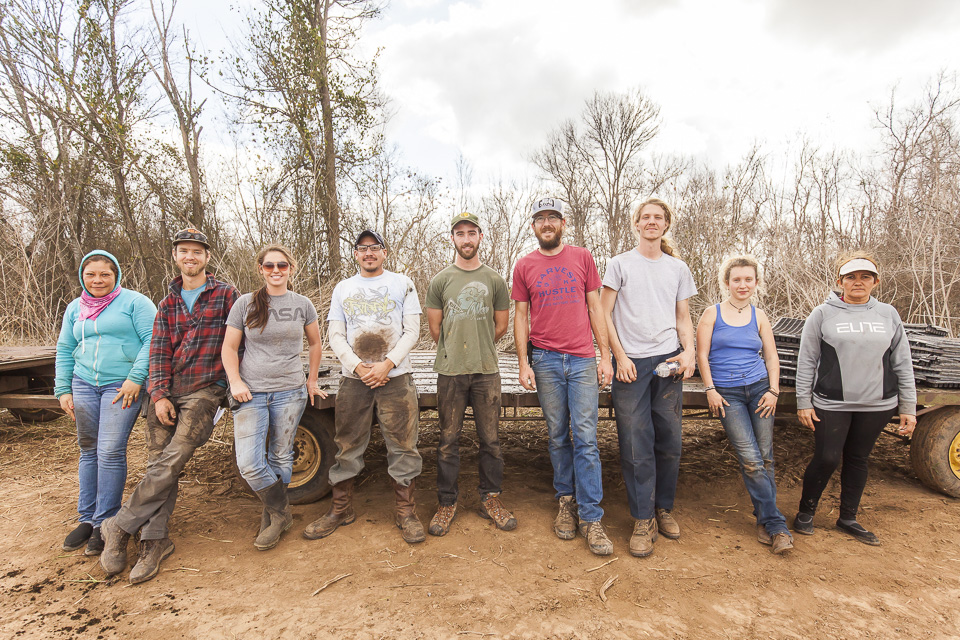 Johannes. Montana, and new faces on the planting crew. Photo by Scott David Gordon.
We get pretty strong winds out here, so with the wind chill the temperature dropped below 20 on Friday, Saturday and Sunday night. While we plant the best varieties we can find for our climate, there just aren't many crops that can survive a freeze like that. Root crops like carrots, beets and turnips handle it the best, with greens at the opposite end of the spectrum. The last of our fall broccoli and cauliflower were pretty much wiped out, and we saw significant damage to collards, kale, rainbow chard and bok choy. If you see any veggies in the next week or two with a little frost damage, don't fret! They're still tasty and packed with nutrition. We appreciate your understanding that Mother Nature is one of the toughest co-workers out there!
In other news, We started training some awesome new transplant crew members this week! Happy to welcome Cody, Velvet, Sam and Josh to the JBG team. Onions are going in along with more spinach, cilantro, pea tendrils and arugula. Brandon seeded a bunch of new herbs in the greenhouse this week including sorrel, thyme, oregano, and sage. Keep an eye out for some succulent new lettuce varieties coming out of our hoop house over the next week or so - we have Boston bibb, red romaine, red butterhead and more (which was warm and snug behind closed doors all weekend)! The weather's playing tricks on us with its 50 degree swings, and yesterday felt more like May than January.
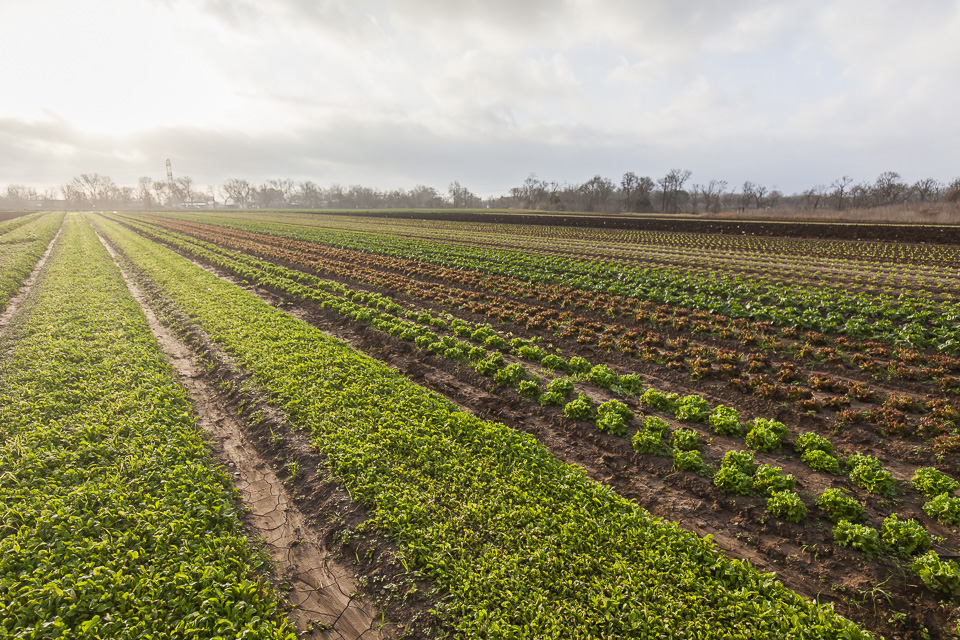 Arugula and lettuce. Photo by Scott David Gordon.
 Preparing transplants. Photo by Scott David Gordon.
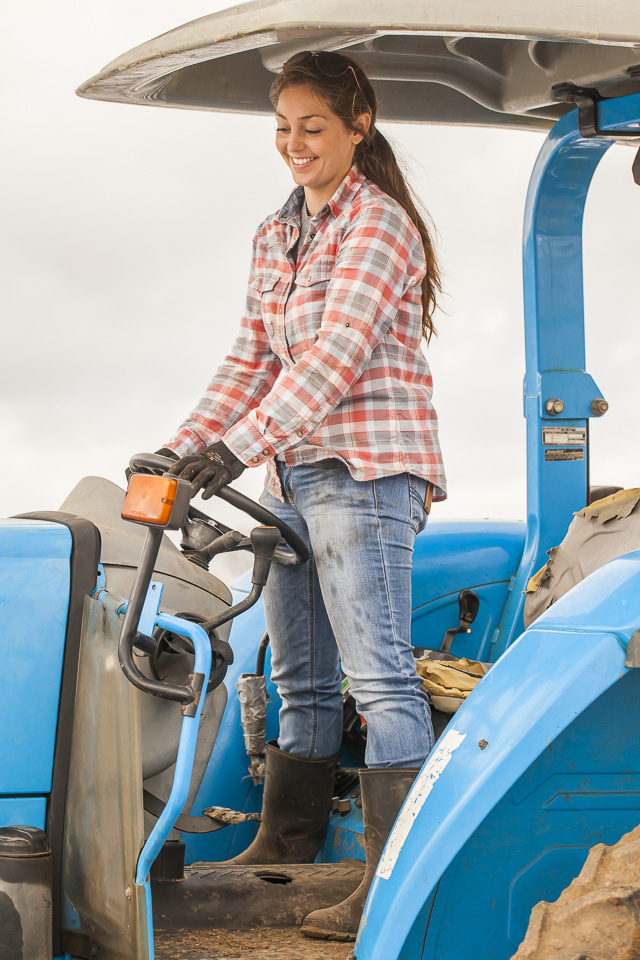 Velvet at the helm! Photo by Scott David Gordon.
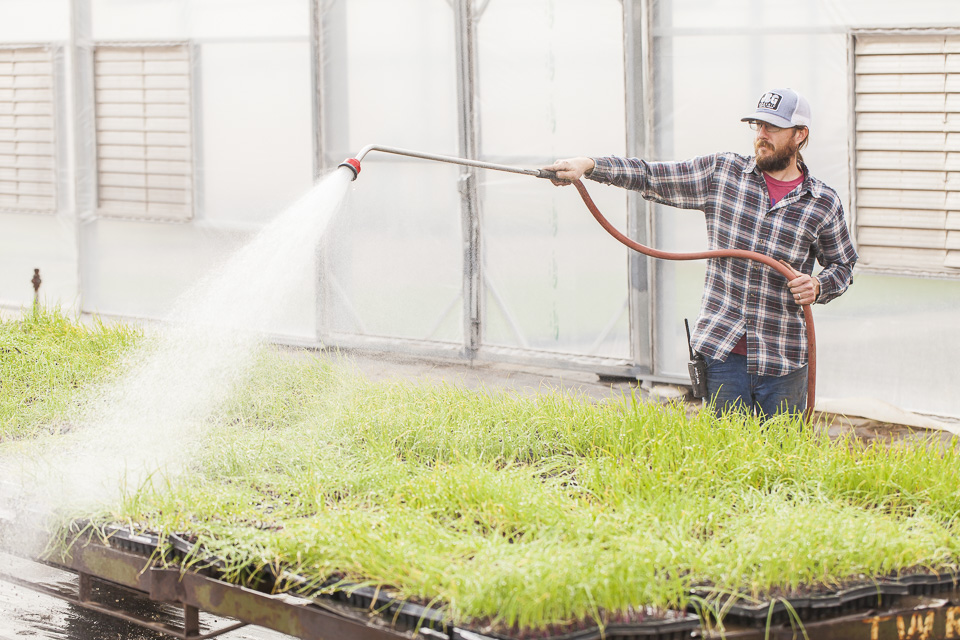 Montana keeping the transplants hydrated. Photo by Scott David Gordon.
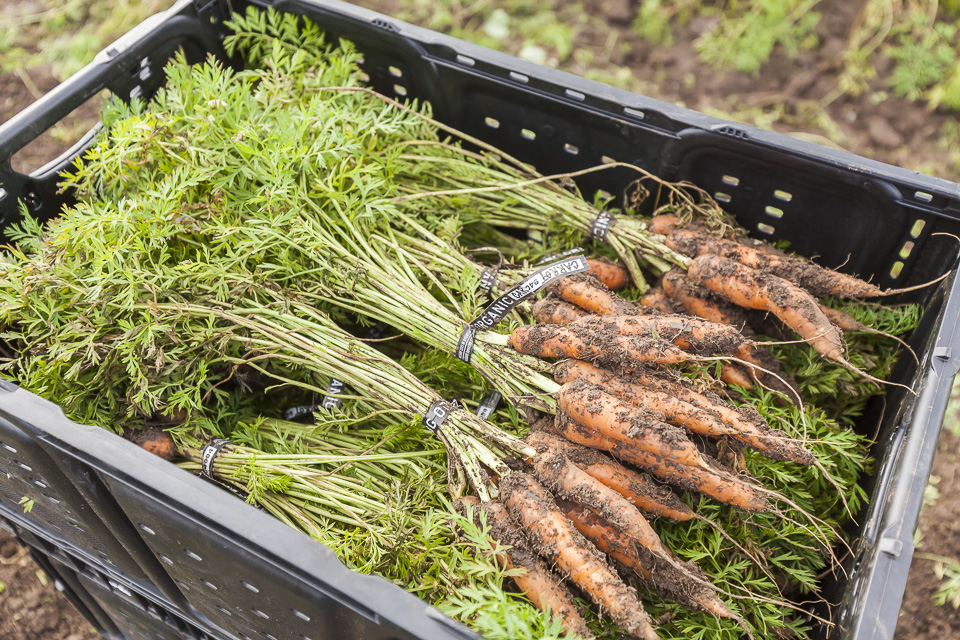 Carrots galore. Photo by Scott David Gordon.
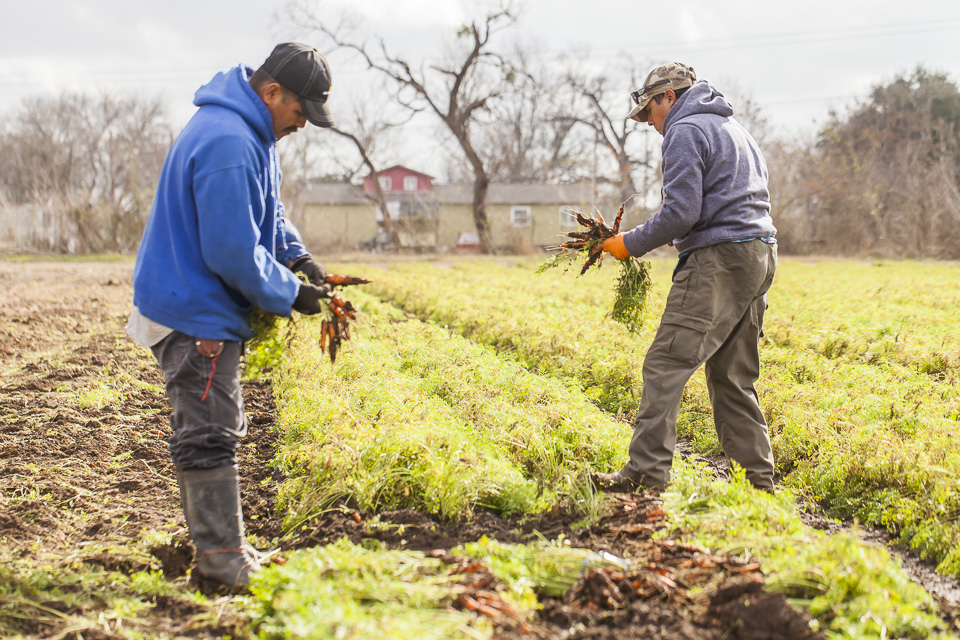 Carrot harvest. Photo by Scott David Gordon.
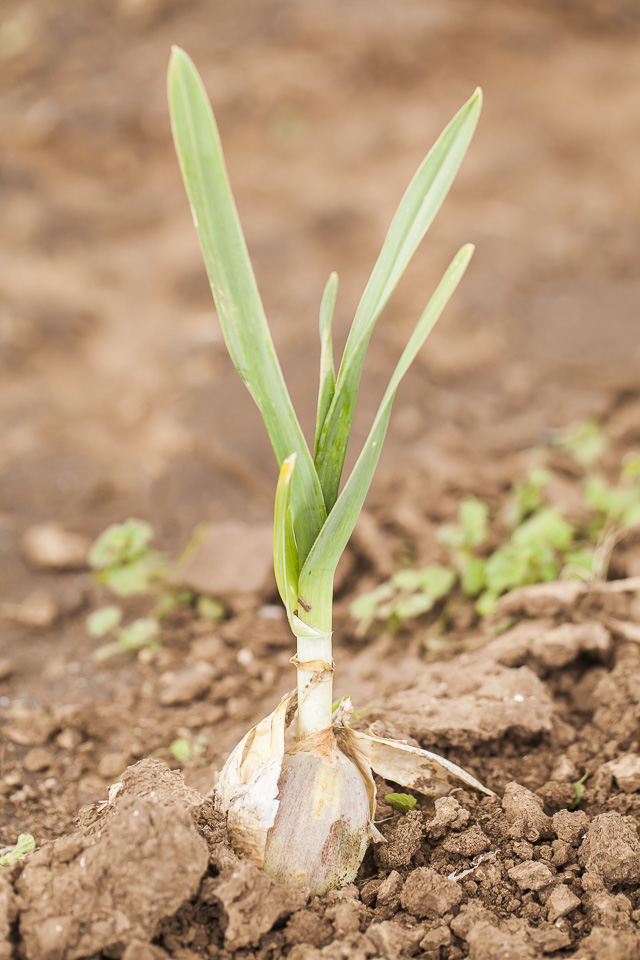 Growin' garlic! Photo by Scott David Gordon.
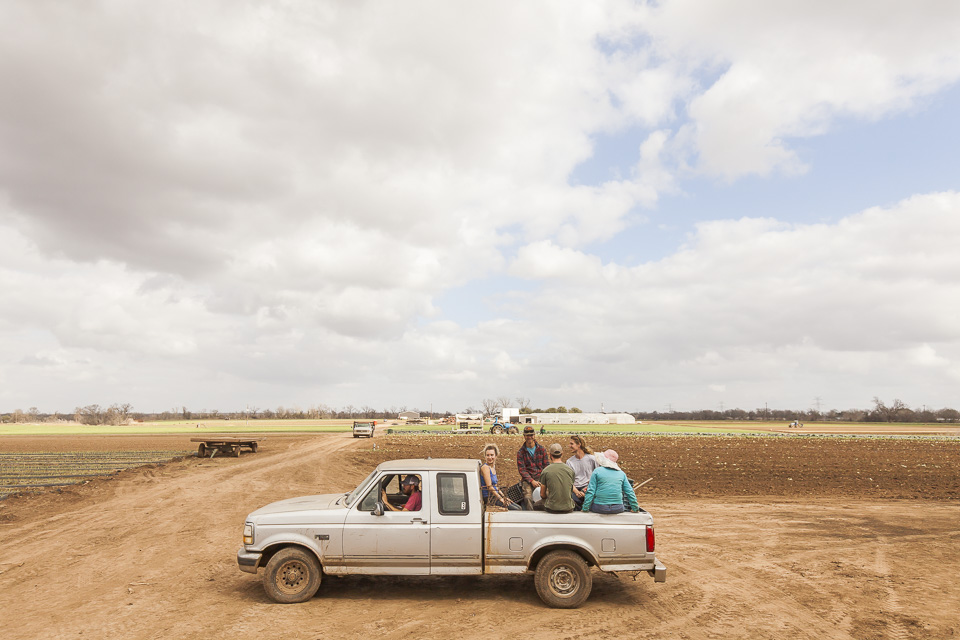 Lunchtime carpool. Photo by Scott David Gordon.
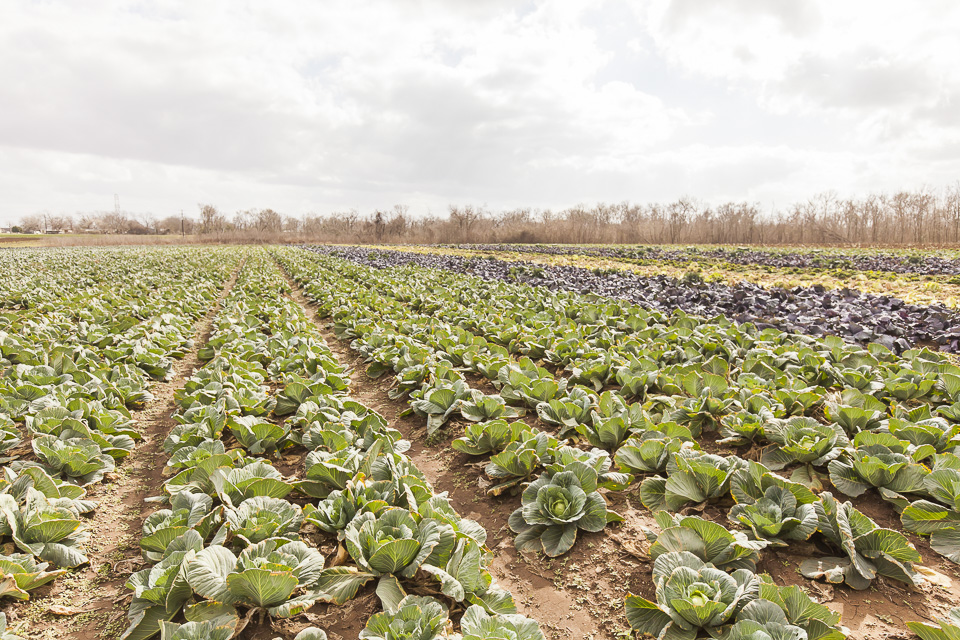 Cabbage patch. Photo by Scott David Gordon.
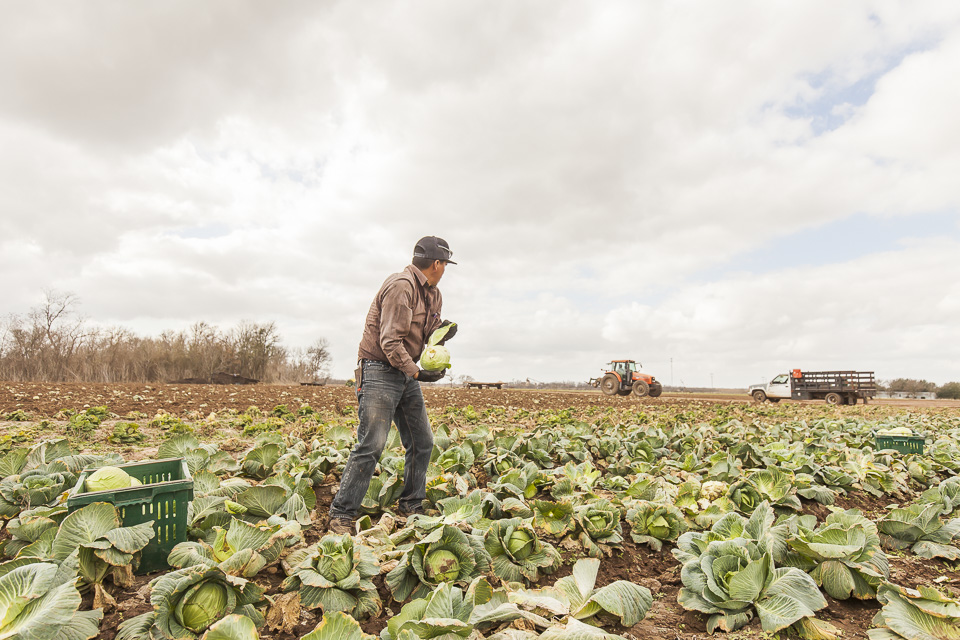 Cabbage harvest. Photo by Scott David Gordon.
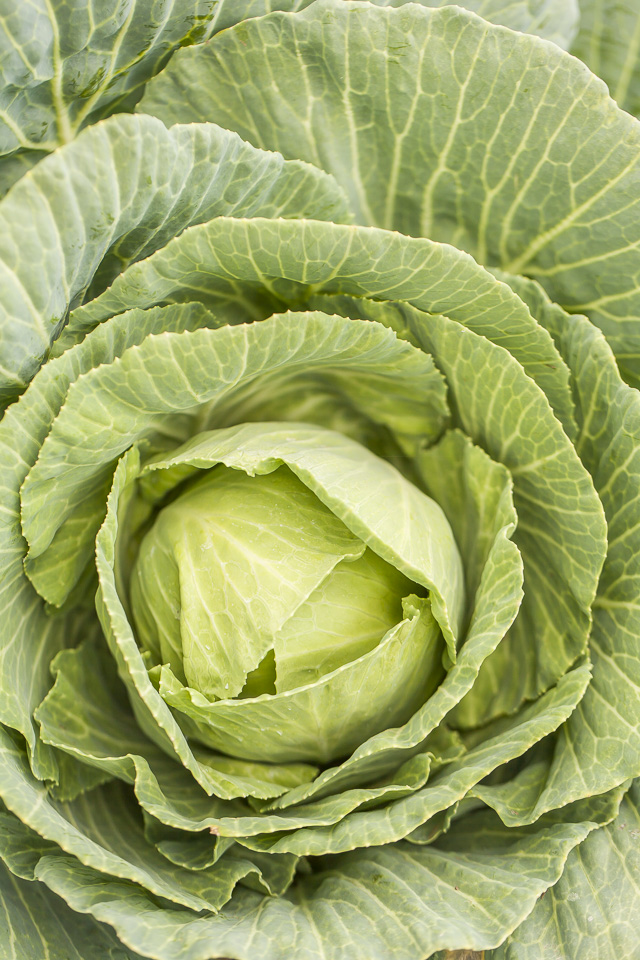 Cabbage. Photo by Scott David Gordon.
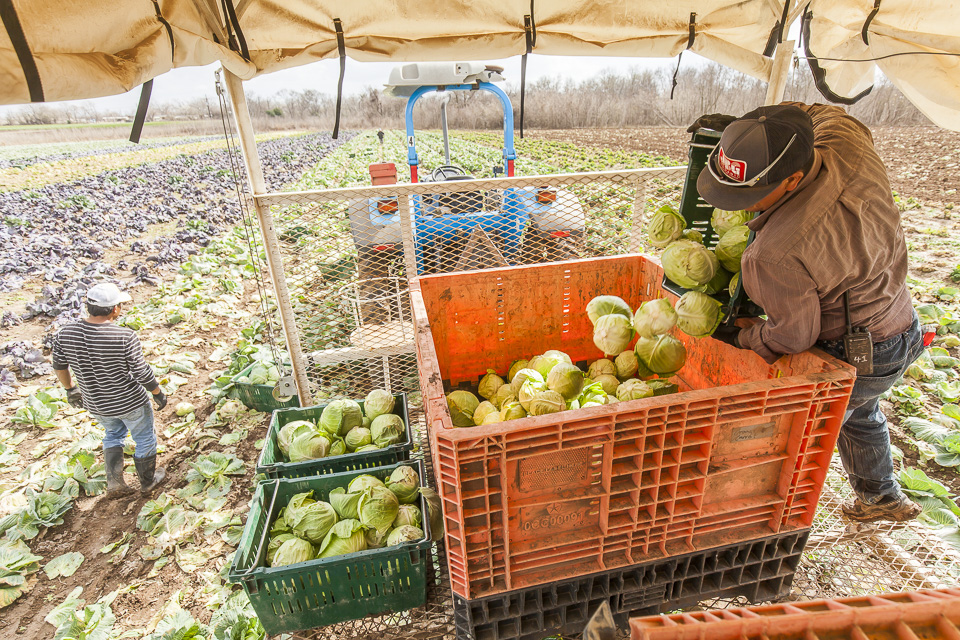 Cabbage catching a ride. Photo by Scott David Gordon.
SCARLET TURNIP & SPINACH GRATIN
01/11/17 — Heydon Hatcher
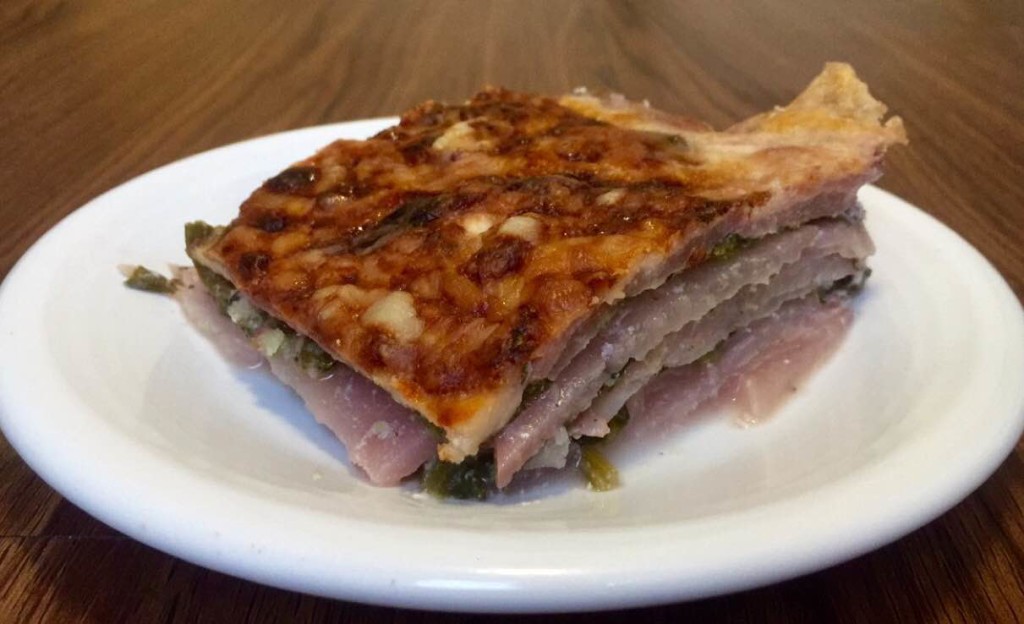 by Megan Winfrey
I think it's safe to say that if you don't know what to do with a particular vegetable, make a gratin. You just can't go wrong with bubbly, baked cheese. You know it will be good, and you get to suss out the flavor of the vegetable for future dishes. Change up the cheese, add different layers, get creative! It's a safe experiment because it can't fail - as long as there is lots and lots of cheese.
Scarlet Turnip & Spinach Gratin
- 2 large scarlet turnips, thinly sliced
- 2 cups spinach leaves, loosely packed
- 6 oz. Gruyere cheese, shredded
- Butter, for the baking dish
- 1 garlic clove, cut in half
- salt and fresh ground pepper
- 2 1/2 cups milk
- 1 tsp. fresh thyme, roughly chopped
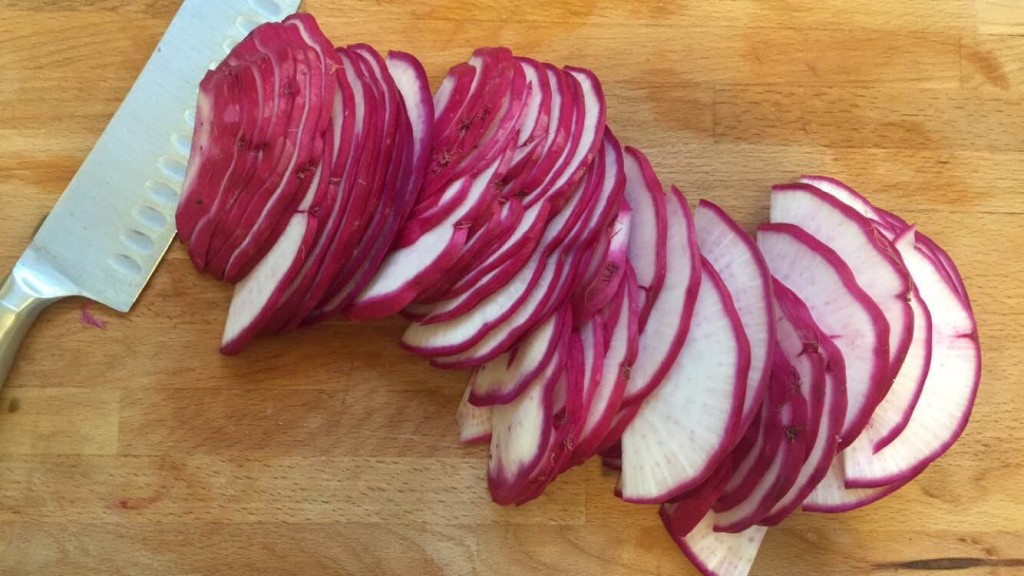
Preheat oven to 400.
Butter a 2 quart baking dish and rub all sides with the cut garlic clove.
In a large bowl, add the turnips, thyme, 2 cups of the cheese, and a generous amount of salt and pepper. Toss together until well incorporated. Start with a layer of turnips in the baking dish, then a layer of spinach leaves. Repeat until everything has been used.
Pour on the milk, place in the oven, and bake for 30 minutes.
With the back of a spoon, push the turnips down into the milk. Spread the rest of the cheese evenly over the top and bake for another 40-50 minutes. When done, the milk should be absorbed, the turnips tender, and the top and sides nicely browned.
Let sit 20-30 minutes, so that the turnips can fully absorb the liquid.
This can be assembled ahead of time, but don't add the milk until ready to bake.
ROASTED FENNEL TOAST
01/11/17 — Heydon Hatcher
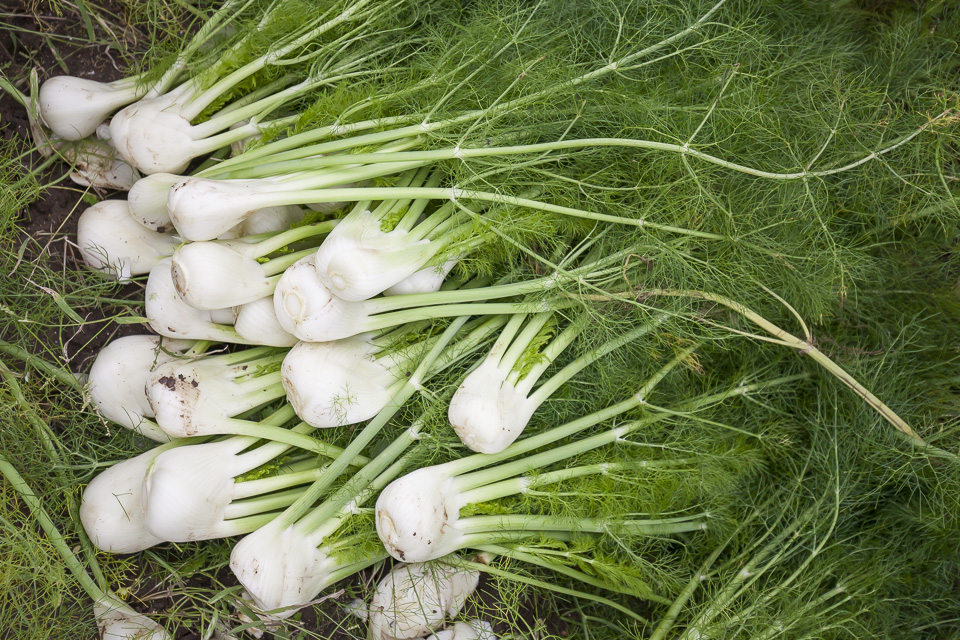 By Hector Gonzalez
Roasted Fennel Toast
- 1 fennel
- 2 garlic cloves, minced
- 1 tbsp olive oil
- Salt & pepper
- Toasted bread
- Balsamic vinegar
Slice the fennel in 1/2 inch pieces. Slice the stalks too
Lay fennel in a baking sheet or cast iron pan. Sprinkle with olive oil, salt, pepper, & garlic
Put under the broiler around 5-10 minutes, until charred
Lay on top of bread, add balsamic vinegar. Use fennel tops for decoration, if desired
Variation: add some cheese on top of the fennel before or after roasting for extra funky flavor
CSA BOX CONTENTS WEEK OF JAN 9TH
01/10/17 — Scott
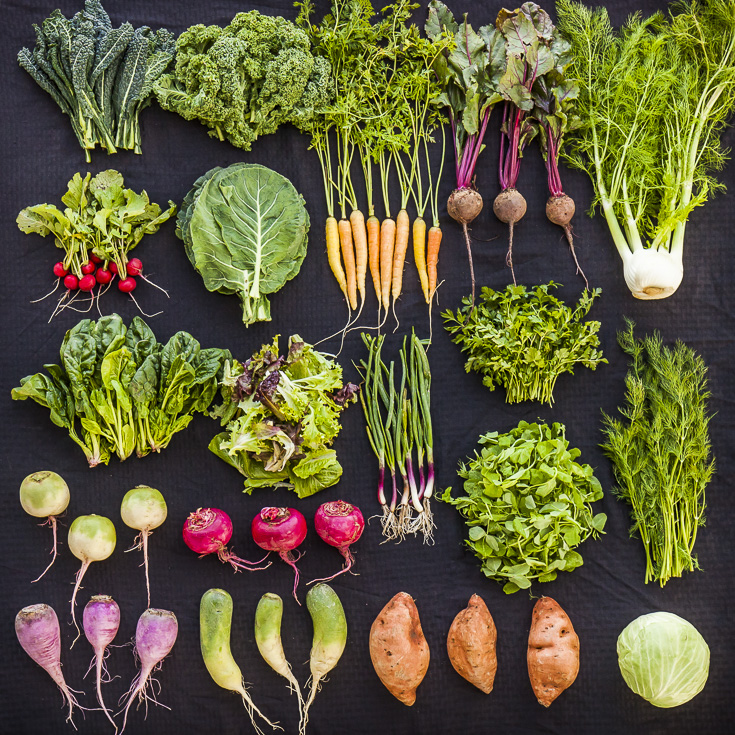 CSA Box Contents Week of Jan 9th
Large Box
Beet, Red
Cabbage, Red
Carrot, Orange
Greens, Collards
Greens, Spinach
Herb, Cilantro
Kohlrabi, Purple
Lettuce, Mixed head bag
Potato, Sweet
Radish, Chinese Pink
Radish, Watermelon
Turnip, Scarlett
Beet, Red
Cabbage, Red
Carrot, Orange
Greens, Collards
Greens, Spinach
Herb, Cilantro
Kohlrabi, Purple
Lettuce, Mixed head bag
Potato, Sweet
Radish, Chinese Pink
Radish, Watermelon
Turnip, Scarlett
Medium Box
Cabbage, Green
Carrot, Orange
Greens, Collards
Greens, Spinach
Herb, Parsley, Curly
Kohlrabi, Purple
Lettuce, Mixed head bag
Potato, Sweet
Radish, Black Spanish
Turnip, Scarlett
Cabbage, Green
Carrot, Orange
Greens, Collards
Greens, Spinach
Herb, Parsley, Curly
Kohlrabi, Purple
Lettuce, Mixed head bag
Potato, Sweet
Radish, Black Spanish
Turnip, Scarlett
Small Box
Beet, Red
Bok Choy
Cabbage, Green
Carrot, Orange
Greens, Spinach
Potato, Sweet
Radish, Black Spanish
Turnip, Scarlett
Beet, Red
Bok Choy
Cabbage, Green
Carrot, Orange
Greens, Spinach
Potato, Sweet
Radish, Black Spanish
Turnip, Scarlett
Individual Box
Cabbage, Green
Carrot, Orange
Greens, Collards
Greens, Spinach
Potato, Sweet
Radish, Purple Daikon
Cabbage, Green
Carrot, Orange
Greens, Collards
Greens, Spinach
Potato, Sweet
Radish, Purple Daikon
FIRST FRIDAY STAFF PICKS - JANUARY '17 EDITION
01/06/17 — Heydon Hatcher
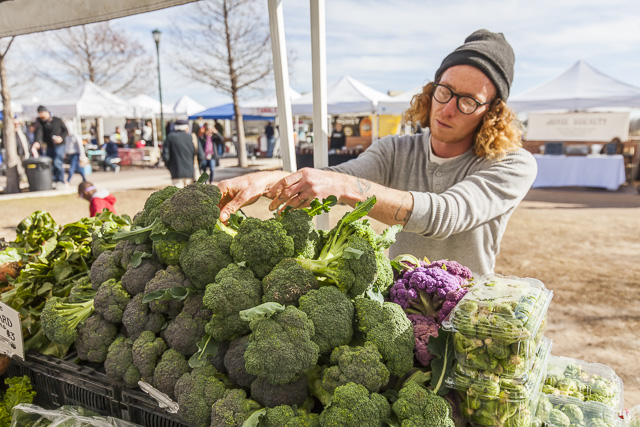
The arrival of a new year AND a new month means another marvelous edition of our First Friday Staff Picks! We think that our staff is the best in the business (okay, okay, we are a little biased), but the JBG family hails from all over the place and covers the gamut in talents and interests. We love sharing events, adventures, and side projects that inspire and excite our JBG-ers (food-related or not) with the community. Check out the staff-curated list of favorites below!
Ada (CSA and Marketing Manager): Nothing new here, but Ramen Tatsuya has my heart this (and every) winter. That broth. One of my absolute favorite things to put in my mouth.
On a recent drive home to Louisiana, I went on a Farmer to Farmer podcast binge. So many ag, agribusiness, and farm related things to learn that you never even knew needed to be learned. Excited to listen to this week's episode where the usual host of the podcast, Chris Blanchard, becomes the interviewee.
Hector (JBG Social Media Extraordinare): Austin comes together for those in need again. This event gathers items needed by the homeless and makes care packages for them. I'll be there!
Travis (Wholesale Manager): The shows during free week are so good, it makes me wanna smack my mama. IN PARTICULAR: Tonight (Friday the 6th) Pushmen and The Well will be at The Sidewinder conjuring tunes so loud and heavy, you'll gladly sacrifice your eardrums for the experience. I'll be there. You should be there.
Charlotte (Asst. Farm Manager) and Brandon (Greenhouse Manager): Last week we flew to Boston and then drove up to Maine to visit family, and were graced with almost two feet of snow! We ate tons of seafood in Portland and hung out with fam, then visited Full Circle Farm in rural Vassalboro. We also got to check out Johnny's test farm and visit with our wonderful seed reps, Randy and Katrina. JBG wouldn't be the same without them, so it was great to finally meet them in person. Randy gave us an amazing tour of their facilities - it was definitely the highlight of the trip! We went tobogganing, drank copious amounts of hot tea, wore goofy (incredible) snowsuits, and ate chowder and/or lobster every day. We spent New Year's Eve in Boston on the last night of the trip, where we walked around in the rain, ate tons of soup dumplings, and accidentally spent way too much money on Champagne. The reset was just what we needed to start the new year.
We were fortunate enough to be able to tour Johnny's Selected Seeds research farm today. Highlight of the trip
A photo posted by Brandon Mallonee (@bmallonee) on
Megan (Recipe Blogger): It's free week! The best time of the year to check out new music in Austin. I'm not going of course, because toddler, but if I were I'd be at Empire Control Room tonight (1/6) for The Digital Wild w/ Calliope Musicals.
What I'm really excited about is a super chilly weekend with no plans, other than making my late Oma's famous chicken n' dumplings. It is the most satisfying bowl of delicious comfort - and I know what you're thinking - it will definitely end up on the blog.
Chucha (Farm Dog): Killin' birds. WOOF.
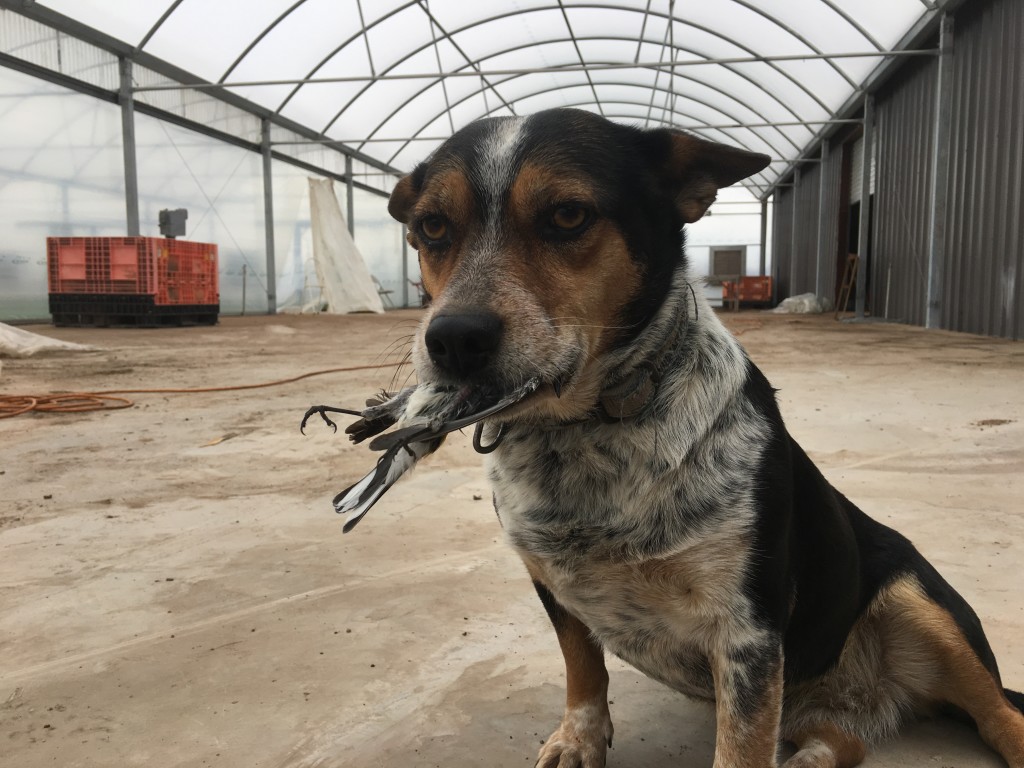 "I'm a stone-cold killa'" -Chucha
Lena (Wholesale Team): As tempted as I am to stay huddled up in my warm apartment this weekend, I’m catching one of Louis CK’s shows at ACL Live on Saturday night since he’s one of my favorites!
And in a few weeks, I’m driving to Dallas to see one of my all-time favorite bands, Cloud Cult! They play experimental rock incorporating strings and brass instruments to put on an incredible show. They also have two artists on stage who create a new painting every night! On top of that, their studio is powered by geothermal energy on an organic farm in Minnesota, and they plant trees to offset their CO2 output. They play Antone’s here in Austin on 1/27 and I highly recommend checking them out.
Missoula (Farm Dog): Mike Mo's stew bones (thanks, dawg). The ceaseless and daily showering of pets by delivery drivers and employees, alike (thanks, dawgs). WOOF.
Mike Mo (Wholesale Manager): My new show is The Man In The High Castle. Great show.
Matt Pelkey (CSA Manager): Check out this concert: The Devil Makes Three @ Emo's on Jan 13th!
Heydon (JBG Blogger): David Sedaris on tape. The holidays usually mean an ungodly amount of car time, chugging over to Alabama, and then bouncing up to Colorado to be with my partner's family. While I am blessed and grateful to have gems of friends sprinkled all over the US to visit and reconnect with, the drive can have its interminable stretches (Yes, I'm talking about you, Kansas); thus, any sort of entertainment is gladly welcomed. We were gifted Let's Talk Diabetes with Owls which had us transfixed and belly-laughing for the majority of eastern Texas, the bayou, and some of southern Alabama.
Whilst in New Orleans (the highlight of the drive back to Sweet Home Alabama methinks), a dear friend of ours introduced us to the divine wine joint, Bacchanal, on the Bywater. The perfect outdoor spot to gather with friends, imbibe delicious wine, savor Cajun tunes, and soak in the magic that the Crescent City has no shortage of. Next time you find yourself in The Big Easy, swing by!
Last but not least, everything Esby Apparel. The colors, the laid back style, the shop, the people who work there, the events. I cannot stop ogling all of the beautiful pieces from this stellar lady-run business. Duffy Jumper for president?